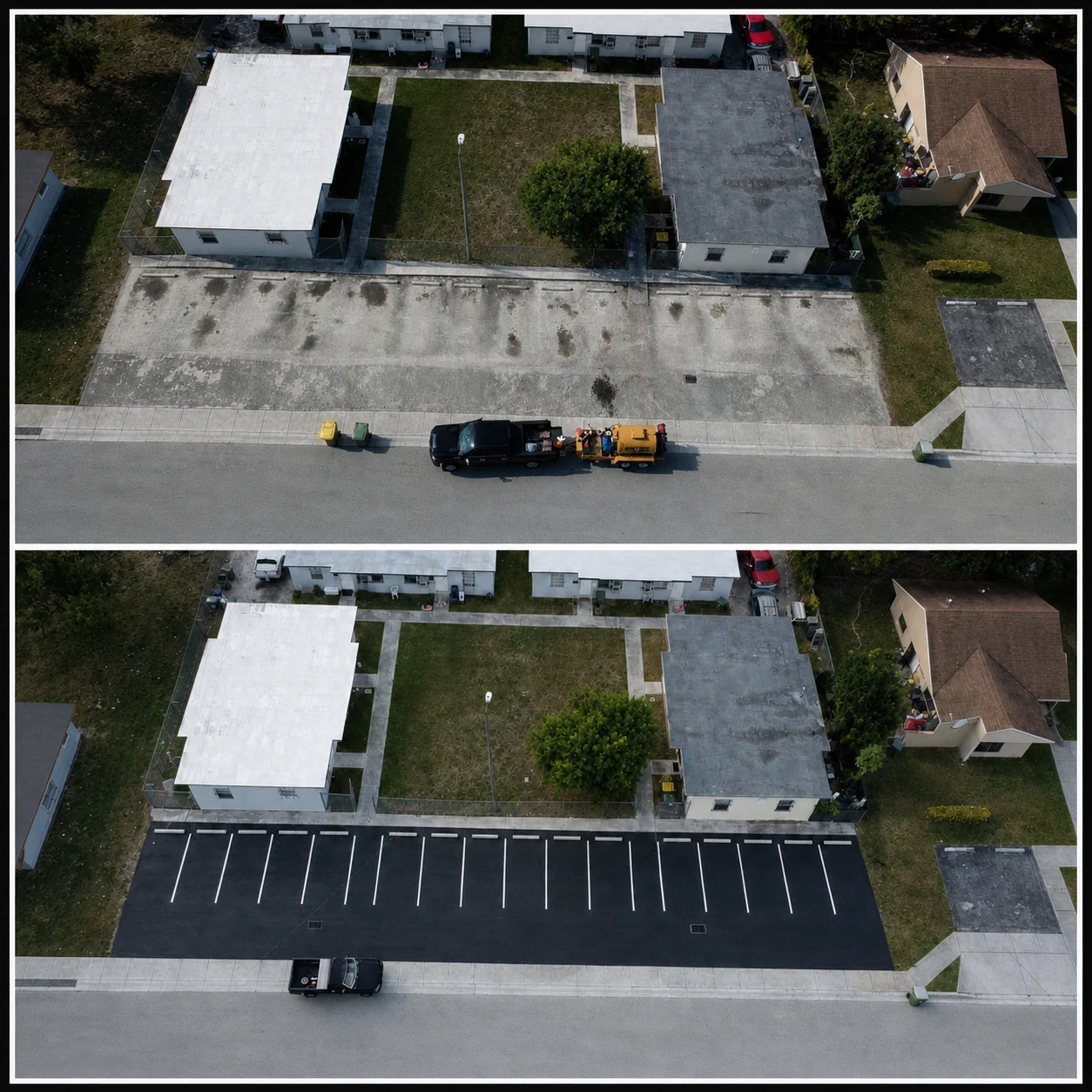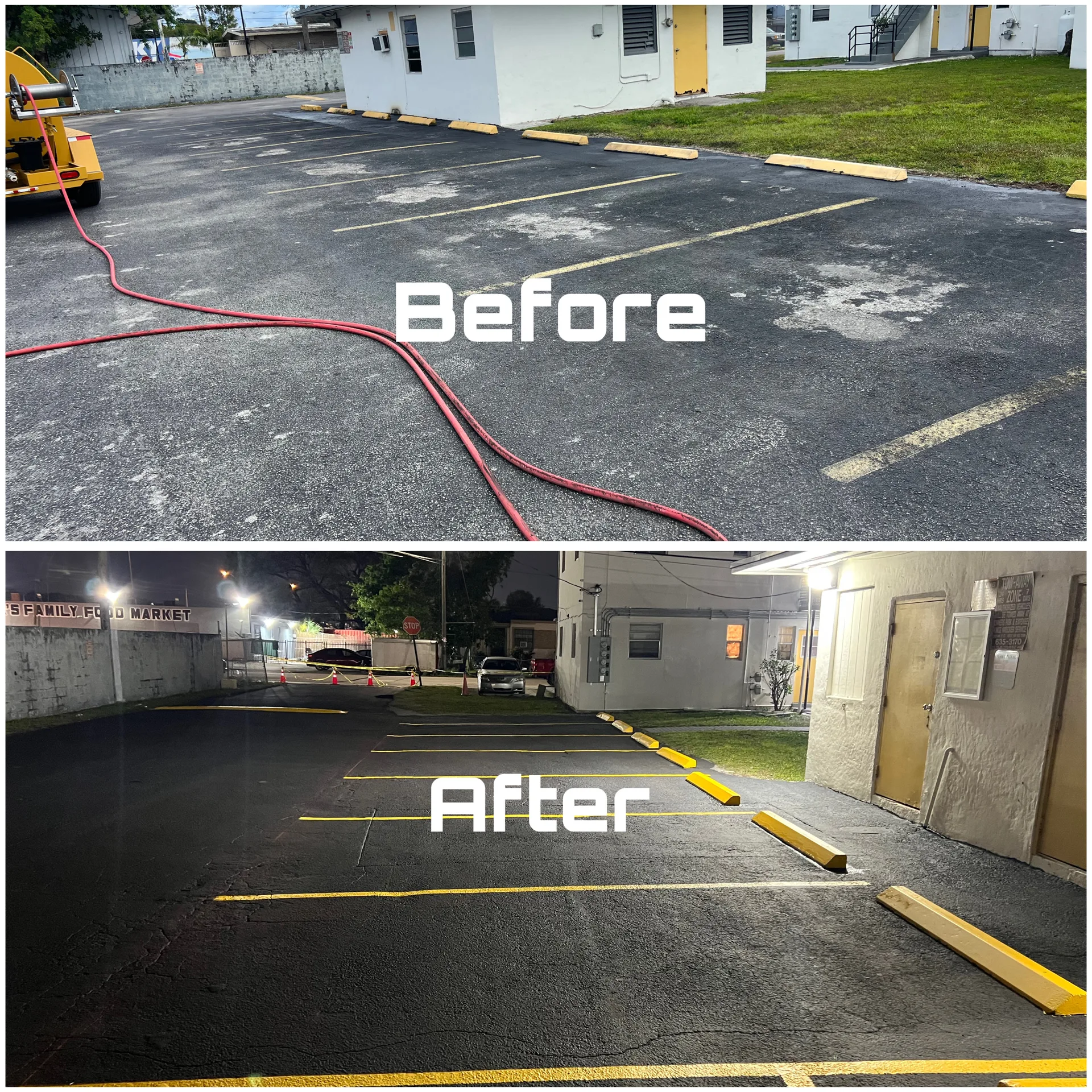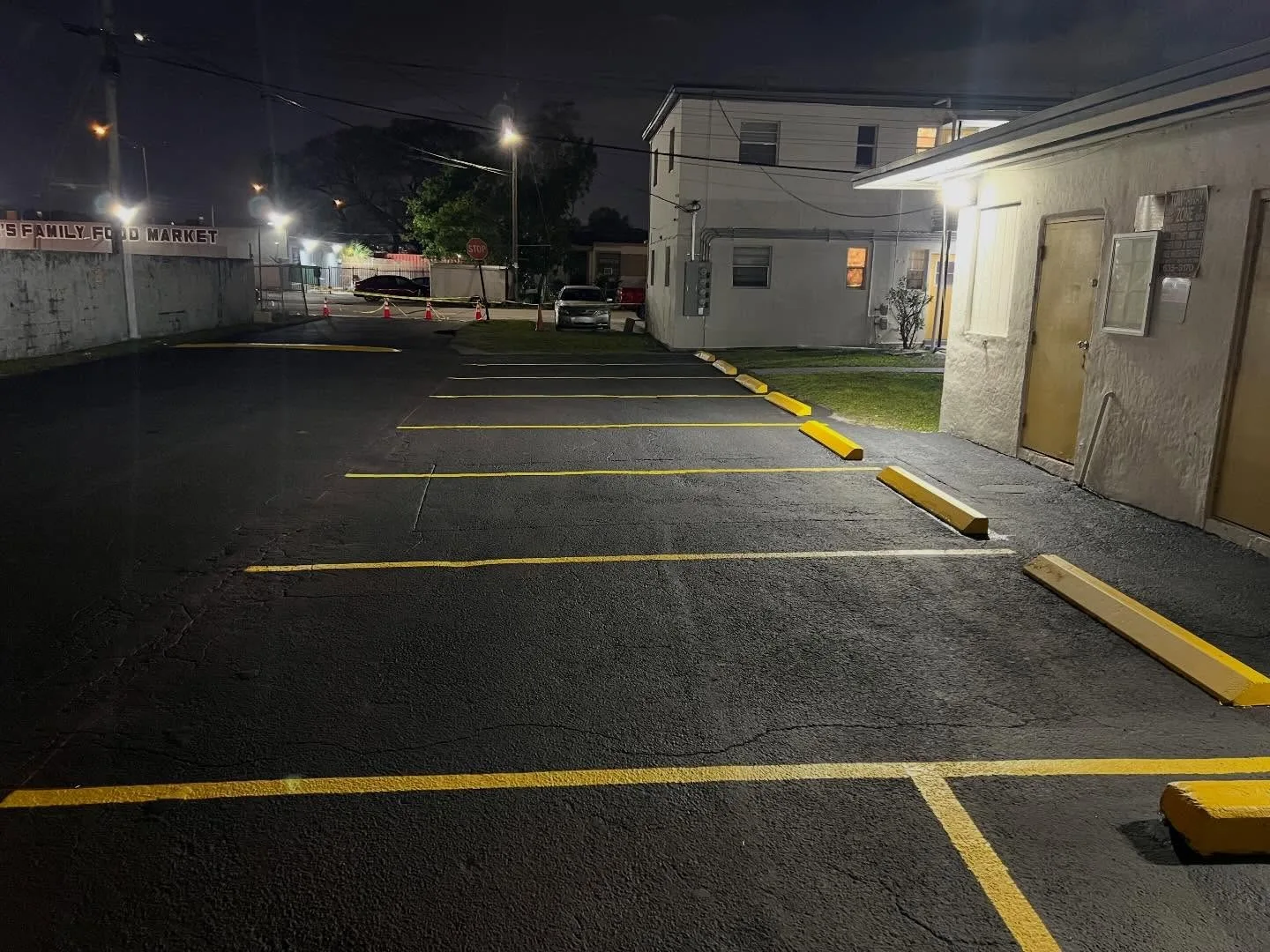


An overlay costs a fraction of replacement because it only renews the surface, and it is only a bargain when the base under it is still sound. This guide explains the three options (overlay, mill and overlay, full-depth replacement), what drives each price, how to read a bid line by line, and when the cheaper choice ends up costing more. Cost figures are typical industry ranges, not a quote, drawn from public bid data, and they are labeled with their limits.
Jump to
- What are the three options?
- What do they typically cost?
- Why do cost guides disagree?
- What drives the price?
- How do you read a bid?
- When does a cheaper overlay waste money?
- What changes in South Florida?
- How to decide
What Are the Three Options?
Most proposals for worn asphalt fall into three buckets, and the price gap between them comes from how much of the pavement is removed. An overlay places new asphalt over the existing surface. A mill and overlay grinds off the top layer first, then places new asphalt. Full-depth replacement removes the asphalt (and often reworks the base) before building the pavement back up.
| Option | What is done | Best fit | Main risk |
|---|---|---|---|
| Overlay | New asphalt placed over the existing surface after repairs | Firm base, surface worn or cracked, enough height for the extra layer | Old cracks reflect through; raises grade at curbs and drains |
| Mill and overlay | Top 1 to 3 inches ground off, then new asphalt placed | Same as overlay, but grade must stay put or the top layer is badly cracked | Costs more than a plain overlay; does nothing for the base |
| Full-depth replacement | Asphalt removed, base repaired or rebuilt, drainage corrected, new asphalt placed | Alligator cracking, soft spots, rutting, ponding, repeated failed patches | Highest cost and the most disruption |
The guide to sealcoating vs overlay vs repaving covers how to match each treatment to what you see on the surface. This page focuses on the money side. Bull's Eye offers overlay and resurfacing and new asphalt paving, and does not publish prices because every lot is different.
What Do They Typically Cost?
Public bid data gives the most reliable unit prices. In a September 2024 City of Tampa resurfacing bid (five bidders), furnished and installed SP-9.5 asphalt ran from $150 to $240 per ton, cold milling to 1.5 inches ran from $4.95 to $7.10 per square yard, and milling over 1.5 to 3 inches ran from $5.20 to $8.70 per square yard. In a May 2026 Florida DOT turnpike resurfacing letting in Broward County, 1.5-inch milling bid at about $2.40 to $3.02 per square yard and a Superpave Traffic C mix at about $149 to $162 per ton, on much larger quantities.
Converting those unit prices shows the shape of the cost. Asphalt mix is typically placed at roughly 105 to 120 pounds per square yard for each inch of thickness (Tennessee DOT and Penn State guidance), so a 1.5-inch layer is about 165 pounds per square yard, or roughly 0.08 ton. At $146 to $240 per ton that is about $12 to $20 per square yard, or $1.35 to $2.20 per square foot, for the new layer. Add milling and a mill and overlay of 1.5 to 2 inches works out to roughly $1.60 to $3.70 per square foot at public-bid prices. Two city documents land in the same neighborhood: Coffeyville, Kansas lists a mill and 2-inch overlay at $22 per square yard (about $2.45 per square foot), and Inver Grove Heights, Minnesota planned around $3 per square foot.
| Item | Typical industry range (public data) | Source type |
|---|---|---|
| Hot mix asphalt, furnished and installed | About $136 to $240 per ton | Tampa 2024 bid; FDOT Broward 2026 letting |
| Cold milling, 1.5 inches | About $2.40 to $7.10 per square yard | FDOT 2026 (large job) to Tampa 2024 (smaller lots) |
| Mill and overlay, 1.5 to 2 inches (derived) | About $1.60 to $3.70 per square foot | Calculated from the unit prices above |
| Full reconstruction vs mill and overlay | About 4 to 10 times the cost per area | Four city documents (see next section) |
For replacement, no reputable parking-lot-specific price list turned up, so no dollar range is given here. What the public documents do agree on is the ratio: reconstruction costs several times as much as a mill and overlay. Hastings, Minnesota says mill and overlay costs 4 to 5 times less than full reconstruction and takes 4 to 6 weeks instead of 2 to 4 months. Inver Grove Heights puts reconstruction at about 5 times an overlay ($15 vs $3 per square foot). Littleton, Colorado's 2016 bid-price table has reconstruction at about 4 times a mill and overlay per lane mile. Coffeyville lists $215 vs $22 per square yard, close to 10 times.
Why Do Cost Guides Disagree?
Published numbers differ because they price different scopes, quantities and years. Contractor-written guides in the current Google results quote anything from about $1.25 to $2.00 per square foot for large-lot overlays up to $3 to $7 per square foot for paving, and a consumer site lists a Florida 2-inch lot overlay near $1.56. These are marketing pages whose methods are not shown, so they are context only.
- Street vs lot. City figures cover roads with curb, utilities, stormwater compliance and traffic control, which inflate reconstruction far more than overlay. A lot has less of that, so the ratio for a lot may be smaller than 4 to 10 times. No opened source measured it.
- Quantity. A 7,500-ton city contract gets better unit prices than a 40-ton private lot with its own mobilization cost.
- Year. Asphalt prices move with oil and binder markets. The Littleton table uses 2016 prices, and the Tampa and FDOT bids are 2024 and 2026.
- What is included. Some quotes bundle patching, striping and drainage; others list only the new layer.
Lifespan numbers disagree too. A Minnesota city says a mill and overlay lasts 15 years or less and a Colorado city says 15 to 20 years for streets. Because the sources do not agree and none measured parking lots in Florida heat and rain, treat any promised lifespan as an estimate and ask the contractor what it is based on.
What Drives the Price?
Nine factors explain most of the difference between two bids for the same lot.
- Area. Price scales with square footage, but quantity discounts and mobilization mean a 5,000 sq ft lot costs more per square foot than a 50,000 sq ft lot.
- Thickness. Asphalt is sold by the ton, so a 2-inch layer uses about a third more mix than a 1.5-inch layer.
- Base condition. Soft or failed base needs cutting out and rebuilding before any new surface goes down. This is the biggest swing factor.
- Milling. Grinding the surface adds a unit price (about $2.40 to $8.70 per square yard in the bids above) but keeps curb heights and drain grades from rising.
- Drainage and grading. Correcting ponding can mean regrading, new inlets or milling to restore slope.
- Patching and crack work. Full-depth patching and crack sealing before paving are separate line items, and skipping them is how bids get cheap.
- Striping, ADA and signs. New asphalt wipes out the paint, so parking lot striping, accessible spaces and wheel stops are part of the real project cost. See the parking lot striping cost guide.
- Access. Tight entrances, trucks that cannot turn around and long hauls raise labor and equipment cost.
- Phasing. Working a section at a time, overnight or on weekends keeps a lot open and can add mobilization. Bull's Eye offers phased, overnight and weekend scheduling for commercial and HOA work.
How Do You Read a Bid?
A good bid lets you compare scopes, not just totals. Ask every bidder to price the same items and look for what is missing.
- Thickness and mix. A compacted thickness (for example 1.5 or 2 inches) and the type of mix, not just “new asphalt.”
- Area and tonnage. Square footage and estimated tons. Dividing the price by area lets you compare against the ranges above.
- Milling. Whether it is included, to what depth, and where.
- Repairs. How many square feet of full-depth patching and how many feet of crack sealing, and how soft spots found during the work will be priced.
- Drainage. What happens to areas where water stands.
- Striping and ADA. Whether paint, accessible symbols, signs and wheel stops are included. The ADA parking lot guide explains the layout rules.
- Allowances and change orders. A low base price with an open-ended “unforeseen base repair” clause is often a high price in disguise.
- Insurance and timing. Proof of general liability insurance and the planned sequence for a lot that stays in use.
When Does a Cheaper Overlay Waste Money?
An overlay wastes money whenever the problem is below the surface. The Federal Highway Administration's thin overlay brief (FHWA-HIF-19-053) calls overlays functional treatments that are not meant to add structural capacity, and says a candidate pavement needs good structure and proper drainage with no poorly draining spots.
- Reflective cracking. The FHWA brief says moderate or severe thermal cracking, or a pattern of reflective cracks in pavement that already has multiple overlays, will quickly reflect through a new thin overlay. Fatigue-cracked (alligator) pavement is not a good candidate unless it gets full-depth repairs or milling first.
- Failed base. New asphalt on a soft base follows the base downward. Rutting caused by an unstable structure, rather than normal traffic compaction, is also a poor candidate.
- Ponding. Standing water softens the base and breaks down the asphalt, so an overlay that leaves low spots in place repeats the failure. The guide to why asphalt fails in Florida goes deeper.
- Covering distress. The FHWA brief warns that placing a thin overlay just to hide visible distress may fail soon after placement.
What Changes in South Florida?
South Florida makes base condition and drainage matter more than the age of the surface. The USGS describes the Biscayne aquifer as highly permeable limestone that sits at or near the land surface practically everywhere, with water levels that rise quickly after rain; one Miami well rose 4.5 feet within hours of an intense 11-inch rainfall. A shallow water table means a base can stay wet, and a wet base is a weak base.
- Rainy season. The National Weather Service in Miami tracks the rainy season from May 15, and paving and curing need dry weather. Schedule around it, and see sealcoating cure time and rain in Florida for the wait times on coatings.
- Limestone base. Limestone is the local geology, but a typical base depth or thickness for Miami-Dade lots could not be verified, so ask for coring or probing rather than assuming.
- Plan before the rainy season. Interest in overlay pricing rises in spring, so start collecting itemized bids early and confirm start dates before the rainy season begins.
How to Decide
- Walk the lot after rain. Mark where water stands and where cracks interconnect.
- Get the base checked. Soft spots, sinking and alligator cracking point toward repair or replacement.
- Request itemized bids. Same thickness, same repairs, same striping on each.
- Compare per square foot. Check each bid against the ranges above and ask about anything far below them.
- Check ADA before paving. The Access Board lists resurfacing of circulation paths or vehicular ways as an alteration under the 2010 ADA Standards. This is not legal advice; confirm with your local authority. Property managers can start with the HOA and condo parking lot and apartment complex pages.
Get the Surface Looked At
Call (305) 710-4512 or request the free on-site estimate. Bull's Eye is at 8260 SW 184th St in Cutler Bay and serves Palmetto Bay, South Miami Heights, Goulds, Naranja, Princeton, Perrine, West Perrine, Richmond Heights and Richmond West. Hours are Monday to Friday 7 to 5 and Saturday 8 to 12.