

Cracks let rainwater reach the base under your asphalt, and in South Florida that base sits close to a high water table. Hot-pour rubberized sealant flexes with the pavement, so water stays out and a small crack does not turn into a repair bill. Bull's Eye hot-pour seals cracks before sealcoating. Call (305) 710-4512 for a free, no-obligation on-site estimate.
What's Included
- Hot-pour rubberized crack sealing
- Driveways, HOA lots and commercial parking areas
- Done before sealcoating so the sealer is not laid over open cracks
- Free on-site estimate that looks at the cracks and the surrounding pavement
- Phased, overnight or weekend scheduling for commercial and HOA properties
Why a Crack Matters More in Cutler Bay
Asphalt is a thin, flexible skin sitting on a base of compacted rock and soil. The base is what carries the load, and water is what weakens it. Miami-Dade sits on porous limestone with a shallow groundwater table, and the National Weather Service in Miami defines the rainy season as May 15 through October 15, when most of the region's yearly rain falls. An open crack gives all of that water a direct path under the surface. Sealing it is a fraction of the cost of repairing what happens after the base is soaked.
Cracks are not all the same, though. A hairline crack in a driveway is a different job from a wide, branching pattern across a parking aisle, and part of what a free estimate does is show which one you have.
Crack Sealing vs. Crack Filling: What the Words Mean
Contractors use both terms loosely, but pavement-preservation guidance draws a line. Crack sealing is for cracks that move, opening and closing with heat and cooling, and uses a flexible, elastic material. Crack filling is for cracks that barely move and uses simpler material. Because Florida pavement expands and contracts every day in the heat, hot rubberized sealant that stays flexible makes more sense than a stiff filler that can pop out. Bull's Eye uses hot-pour rubberized crack sealing.
| Option | How it is applied | Typical fit |
|---|---|---|
| Hot-pour rubberized sealant | Melted, applied hot into a cleaned crack | Driveways and lots where cracks flex |
| Cold-pour or tube filler | Applied at ambient temperature from a jug or tube | Small, low-traffic cosmetic cracks; usually shorter-lived |
| Patch or overlay | Damaged asphalt removed or covered | Wide, crumbling or interconnected cracking where sealant alone will not hold |
How a Crack Gets Sealed
- Walk the pavement. Look at crack width, edges and how much the surface around them has deteriorated.
- Clean the crack. Grass, dirt, debris and loose or old filler need to come out. Sealant bonds to clean, dry asphalt, not to dust or roots.
- Apply hot rubberized sealant. The sealant goes in hot so it flows into the crack and bonds to the walls.
- Finish and protect. If the job includes driveway sealcoating or commercial lot sealcoating, the cracks are sealed first so the sealcoat goes over a sound surface.
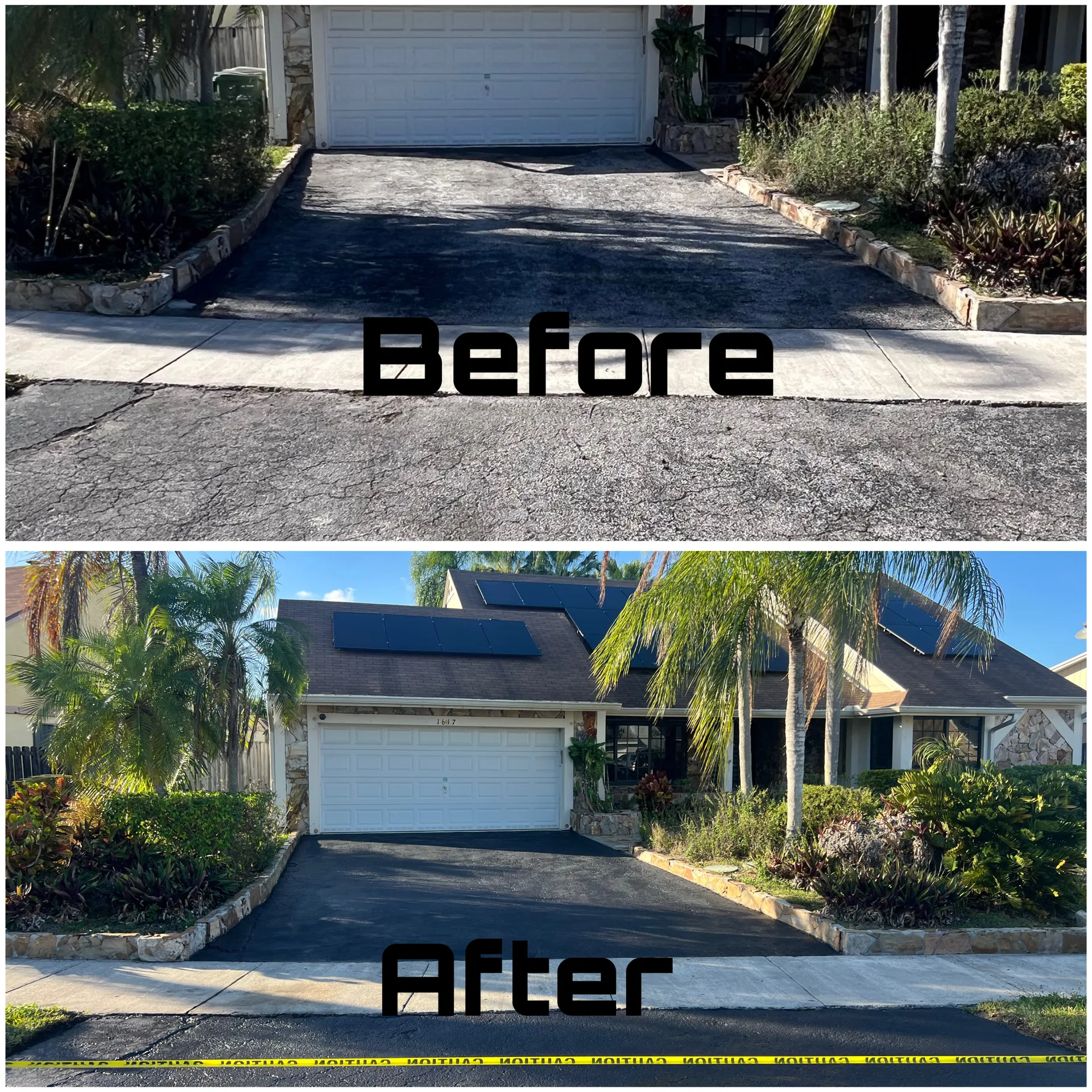
A Cutler Bay driveway before and after sealcoating. Cracks are treated before the coating goes on.
How Long Does Crack Sealing Last?
Pavement-preservation guidance puts properly installed crack treatments at roughly three to five years of useful protection, and some industry sources put hot-pour sealant higher, with cold-pour often shorter. The honest answer is that it depends on crack movement, traffic, sealant quality and how well the crack was cleaned. Crack sealing is maintenance, not a one-time cure. Cracks reopen over time, and checking them every year or so keeps the seal intact.
What to Expect
- Disruption is small. Hot-applied sealant needs to cool only briefly before traffic; one manufacturer guide cites 15 to 20 minutes, versus about 24 hours for cold-applied products. Ask your contractor when to stay off.
- Weather matters. Sealant needs dry pavement. In rainy season, afternoon storms can push a visit back, which is normal for South Florida.
- Properties with residents or tenants. Bull's Eye works with HOA boards and property managers and can schedule in phases, overnight or on weekends to keep access open.
When Sealing Is Not Enough
Crack sealing works on cracks in otherwise sound pavement. Interconnected “alligator” cracking, surfaces that flex under a vehicle, or sections where the base has already failed need a different repair. That usually means patching and pothole repair, an overlay, or in the worst case new paving. A fix that will not hold is not worth paying for.
What Affects the Price
Crack sealing is usually priced by the length of crack, so the main drivers are total linear footage, crack width and condition, how much cleaning is needed, and access. Published cost guides vary widely, so no number is quoted here. Your price comes from the free on-site estimate, based on your actual cracks.
Do It Yourself or Hire a Pro?
A tube of cold filler can slow down a single hairline crack. For anything longer, wider or in a lot, hot-applied sealant bonds and flexes better, and prep is where DIY jobs usually fail. Dirt and moisture left in the crack are the common cause of filler pulling out. If you are weighing a pro, ask whether cracks are cleaned first, what material goes in, and whether crack sealing is in the estimate or an extra.
Serving Cutler Bay and Nearby Communities
We are based in Cutler Bay and seal cracks in driveways, HOA lots and commercial parking areas, including as part of a full sealcoating job. We also serve Palmetto Bay, South Miami Heights, Goulds, Naranja, Princeton, Perrine and West Perrine, Richmond Heights and Richmond West. A property manager who reviewed our multi-family work wrote that we “worked with our staff and tenants and made the sealcoating and striping job very easy.”
Ready to find out what your cracks need? Request your free estimate or call (305) 710-4512. See also our FAQ.


