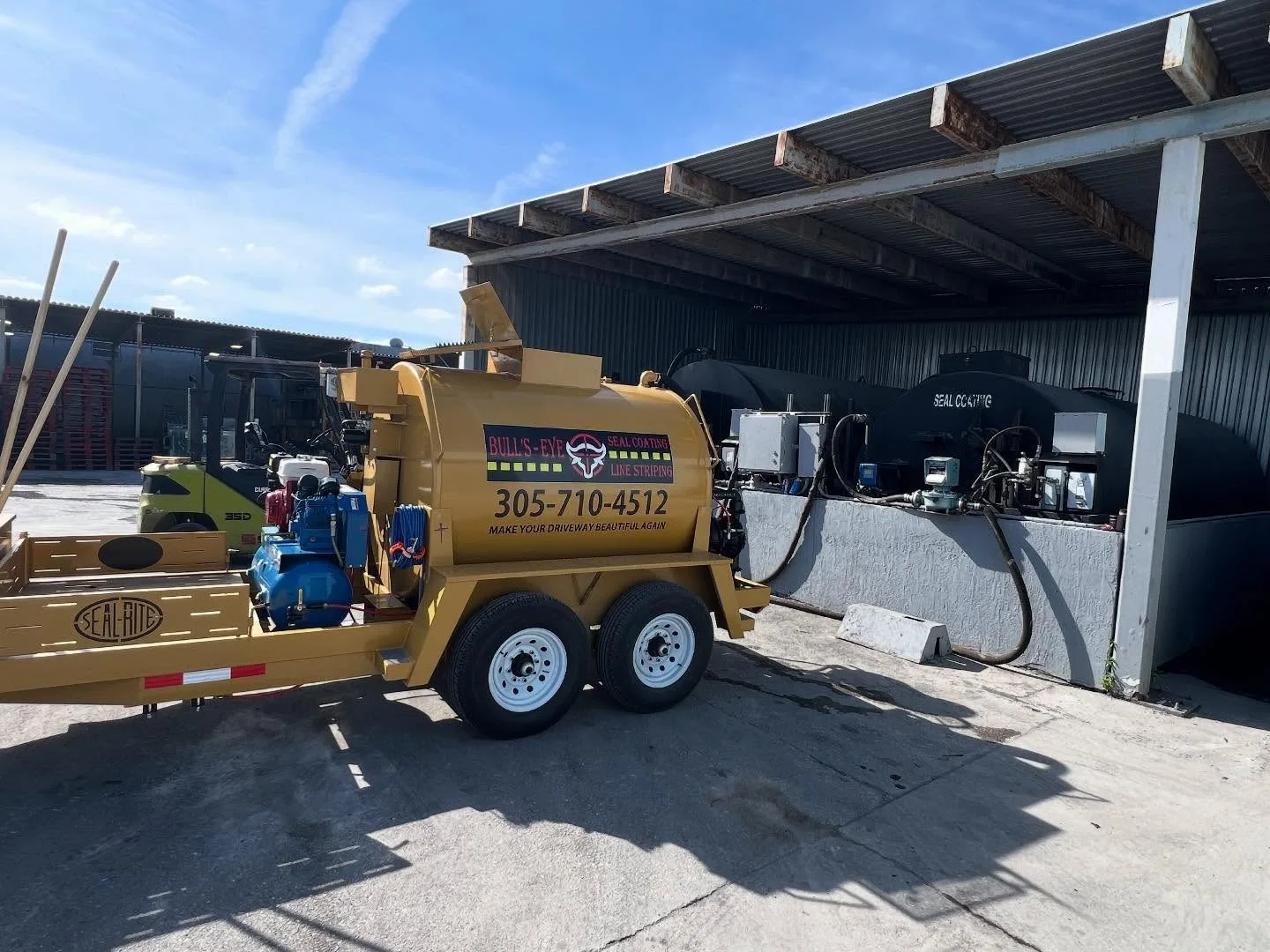

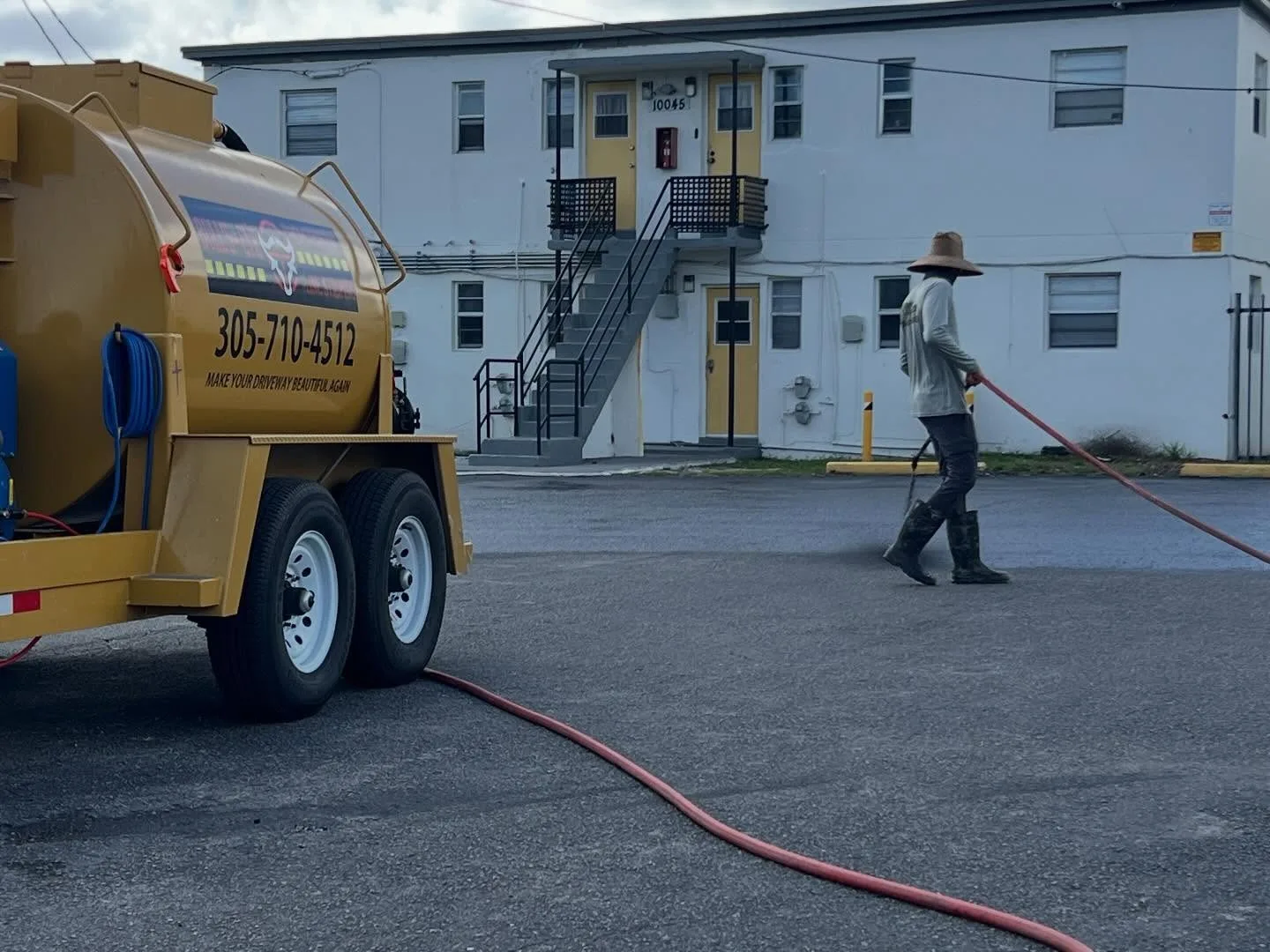

For an apartment community the parking lot is part of the product: residents notice it every day, prospects see it on the tour, and a pothole or faded fire lane becomes a liability question. Bull's Eye Seal Coating & Line Striping sealcoats and stripes in the same visit and schedules commercial work in phases, overnight or on weekends, so occupied buildings keep most of their parking. This page is written for owners and property managers running income property.
What's Included
- Sealcoating and striping done in the same visit, so each section closes once
- Hot-pour rubberized crack sealing and pothole repairs before any coating
- Phased, overnight or weekend scheduling for occupied communities
- Resident-notice and closure planning checklist for property staff
- ADA stalls, fire lanes, curbs, wheel stops and signs in the same project
- General liability insurance with proof on request, and free on-site estimates
What a Parking Lot Does for an Apartment Community
A rental community's pavement affects leasing, resident retention and risk at the same time, so maintenance timing is an operations decision and not only a pavement decision. Faded stripes and cracked asphalt are the first things a prospect passes on the way to the leasing office, and a pothole that damages a resident's car or causes a fall creates a claim. A planned program of crack filling, sealcoating and restriping costs far less than the emergency version, and it can be scheduled around move-in peaks.
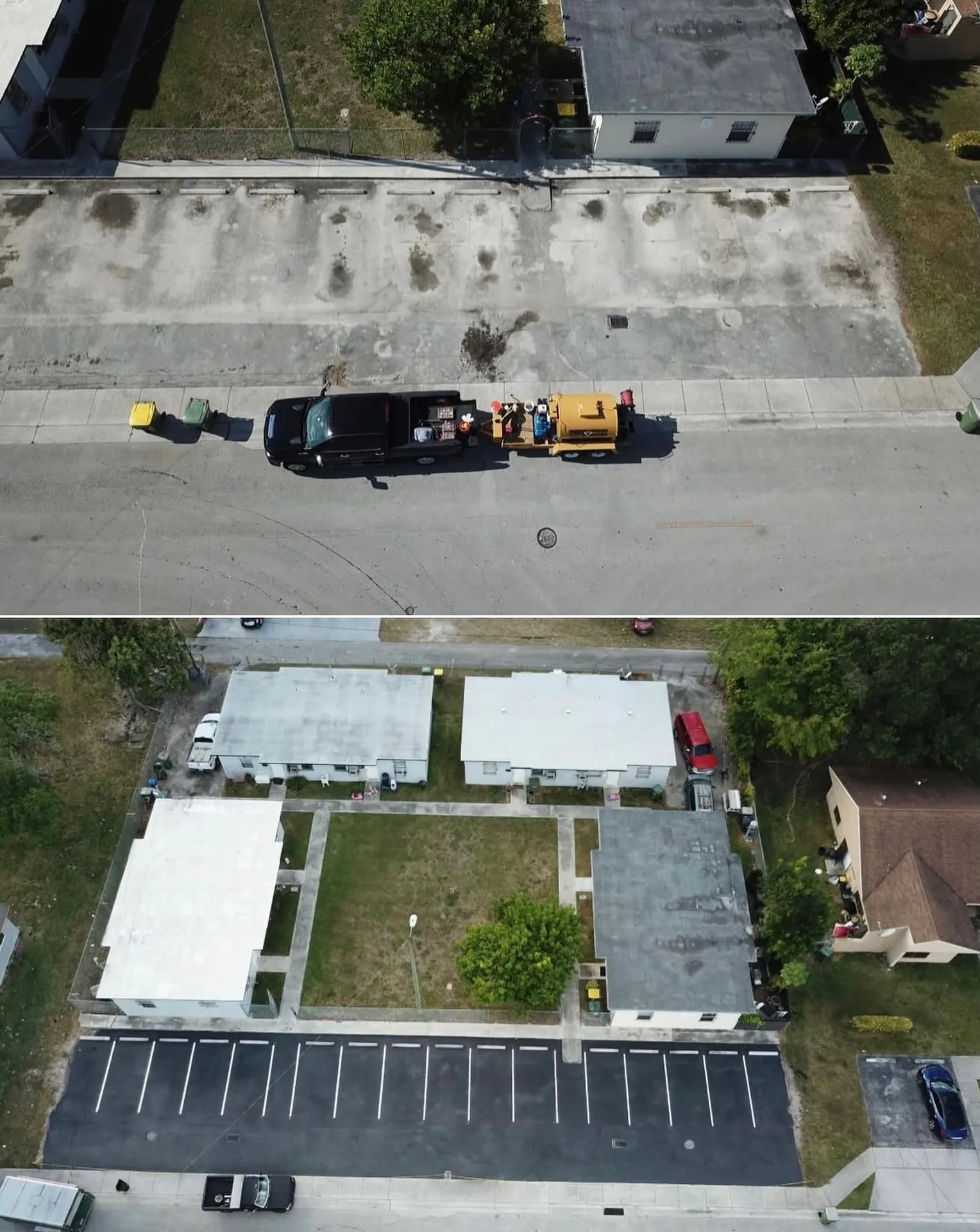
Before and after: apartment complex parking lot sealcoating and striping.
One real review on the business's Google profile reads: "Bull's Eye did a great job at our multi family property. Worked with our staff and tenants and made the sealcoating and striping job very easy." Staff and tenant coordination is the part owners worry about most, so the sections below spend most of their time on it.
Triage First: Which Problems Need Which Fix
Walk the lot with the maintenance supervisor and sort what you see into repairs that must happen first and coatings that go on top. Sealcoating is a surface treatment, so it only works over pavement that is structurally sound.
| What you see | Risk to the property | Typical fix |
|---|---|---|
| Potholes and broken edges | Vehicle damage, trip-and-fall claims | Patching; Bull's Eye completes most pothole jobs the same day |
| Hairline to wide cracks | Water reaches the base and expands damage | Hot-pour crack sealing before sealcoating |
| Gray, faded, rough surface with sound base | UV and oil exposure speed aging | Sealcoating (two coats) |
| Alligator cracking, sunken or soft areas, standing water | Failed base; a coating will not hold | Repair or overlay; see the sealcoat vs overlay vs repave guide |
| Faded stalls, arrows, fire lane and curb paint | Parking disputes, code and safety issues | Restriping after sealcoating |
Sealcoat and Stripe in One Visit
Every time a section of the lot closes, residents inconvenience and staff time go up. Sealcoating covers the old paint, so striping has to follow anyway; doing both in one visit means each section is closed once. Bull's Eye can sealcoat and stripe in the same visit, which is the main reason property managers ask for the two services in a single proposal.
- Repairs. Cracks are filled and potholes patched ahead of the coating.
- Cleaning and priming. The surface is cleaned and oil spots primed so the sealer bonds.
- Two coats. The sealer goes down in two coats.
- Restriping. Stalls, arrows, ADA symbols, fire lanes and curbs are repainted after the sealer is ready for lines.
- Signs and stops. Wheel stops and signs are added or replaced while the section is closed.
Phasing Around Residents and Turnover
The usual solution to limited parking is to split the community into zones and work one at a time, ideally overnight or on a weekend when more residents are home but fewer are driving. Bull's Eye schedules commercial work in phases, overnight or on weekends. The right pattern depends on the property, so decide with the contractor how many spaces can be offline at once.
- Map the zones. Divide by building or parking row, and note guest, reserved, accessible and fire-lane spaces in each zone.
- Offer an alternate. Identify overflow areas, street parking or an unused lot for each phase, and confirm that your lease terms and local rules allow it.
- Plan around move-outs and move-ins. Avoid scheduling a zone on a busy turnover weekend, and keep moving truck access open.
- Protect deliveries and services. Tell trash, mail, package carriers and maintenance vendors which areas are closed and when.
- Have a rain plan. Sealcoating needs dry pavement, and rainy-season afternoons often move a zone. See cure time and rain in Florida.
Tenant Notices and Resident Complaints
Most complaints on pavement jobs are about surprise, not about the work: a car that could not leave, a missing guest space, a tracked footprint on a doormat. A written notice schedule prevents the large majority of them.
What every notice should say
- Exactly which spaces or rows are closed, with a map.
- Start and end times, and the time cars must be moved by.
- Where to park instead, and who to contact with questions.
- What happens if rain moves the date, and how residents will be told.
- What residents should avoid after the lines are down (see below).
Send the first notice well ahead, a reminder shortly before the work, and a door hanger or sign on the day. Have staff available for questions, and keep a log of calls so you can answer repeat complaints consistently. For legal questions about vehicle removal, lease notice requirements or liability for vehicle damage, ask your attorney; the contractor cannot answer those for you.
After the work
- Ask for the contractor's stated time before cars return and put it in the notice.
- Keep carts, strollers and pets off until the surface is ready.
- Expect light scuffs in the first days; report tacky areas after the stated time.
Accessible Spaces, Fire Lanes and Curbs
Apartment communities have to get accessible stalls and fire lanes right, and restriping is when they are most likely to change. The ADA's guidance on restriping says that when a business or local government restripes a parking facility it must provide accessible spaces as required by the 2010 ADA Standards, that the number is figured separately for each parking facility, and that one in every six accessible spaces, and always at least one, must be van accessible. The 2010 Standards give a minimum of one accessible space for a facility of 1 to 25 spaces, two for 26 to 50 and three for 51 to 75, with larger tables above that.
- Applicability varies. Leasing offices, amenity areas and other public-facing parts of a community are treated differently from resident-only parking, and the Fair Housing Act may also apply to residential buildings. Confirm with your attorney or the local building department what applies at your property.
- Layout details matter. Access aisles, signs and van stalls need to be laid out correctly before painting; see the ADA parking lot requirements guide and ADA striping and signage.
- Fire lanes. Placement and marking are set by the local authority having jurisdiction. Confirm with the fire marshal, then read fire lane marking rules in Miami-Dade and see fire lane painting and curb painting.
- Wheel stops and signs. Replace broken or missing stops, and make sure reserved, guest and tow-away signs match the lease and local rules.
This is general information, not legal advice. Confirm requirements with your local authority.
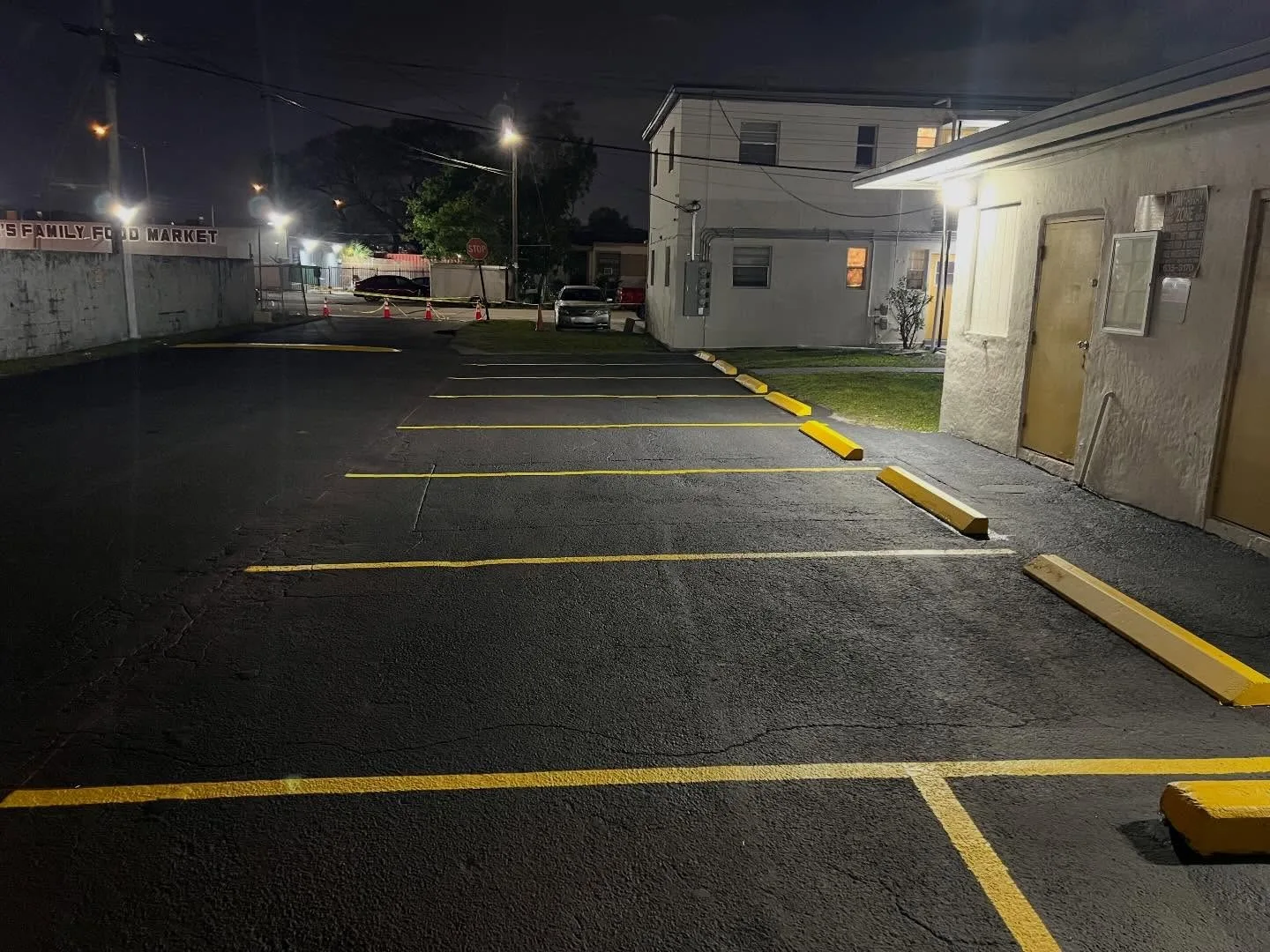
Striping and wheel stops on a multi-space lot.
Liability and Documentation for Owners
Owners and asset managers usually want paper before a pavement project starts: proof of insurance, a written scope and a record of notices. Bull's Eye carries general liability insurance and can provide proof on request. Beyond that, keep these records in the property file.
- Dated before-and-after photos of each zone, including any existing damage.
- The signed scope with measured quantities, crack and patch counts, coats and striping items.
- Copies of every resident notice and the date and method of delivery.
- A note of any resident complaint and how it was resolved.
Ask any contractor how vehicle or property damage claims are handled, and get that answer in writing before the work begins.
When to Plan the Work
Most owners plan pavement work against the capital budget and the leasing calendar rather than waiting for failure. Sealcoating is a maintenance treatment applied on a cycle; how often to sealcoat in Florida explains how to judge the timing. Dry weather matters, so many managers pencil in dry-season windows and keep flexible dates for the rest of the year. For a cost framework to take to ownership, see the sealcoating cost guide; actual pricing comes from an on-site estimate.
If your community is run by an association rather than an owner, see the guide for HOA and condo parking lots.
Next Step
Bull's Eye is based at 8260 SW 184th St in Cutler Bay and serves Cutler Bay, Palmetto Bay, South Miami Heights, Goulds, Naranja, Princeton, Perrine and West Perrine, Richmond Heights and Richmond West; see service areas. Call (305) 710-4512 or request a free, no-obligation on-site estimate. Hours are Monday to Friday 7 a.m. to 5 p.m. and Saturday 8 a.m. to noon.


