

A fire lane has to be marked the way your fire marshal specifies, and in Florida that is not one universal color: some jurisdictions call for red, others yellow, and the wording, letter size, and sign spacing are set locally. Bull's Eye offers fire lane painting and striping in Cutler Bay and nearby communities. Whatever the specification, the goal is the same: markings that are clear, legible, and consistent with your signs.
What's Included
- Fire lane curb and pavement marking
- "FIRE LANE" or "NO PARKING FIRE LANE" stenciling
- Marking guided by your site plan or fire marshal's markup
- Fire lane sign installation
- Repainting of faded lanes, or marking new lanes on a lot that never had them
Who Decides What Your Fire Lane Looks Like
The Florida Fire Prevention Code, which adopts NFPA 1 (the Fire Code) and NFPA 101 as amended for Florida, is the statewide framework.. Chapter 18 of NFPA 1 covers fire department access and gives the local authority having jurisdiction (the AHJ, usually your fire marshal) the power to require approved signs or markings for fire lanes. That is why the answer to "what color is a fire lane in Florida?" is: whatever your AHJ specifies.
Published local standards show how much this varies: some jurisdictions call for red curbs, others for yellow, and the lettering and signs differ too. Neither is "wrong"; they are different local specifications. For a property in Cutler Bay, Palmetto Bay, or unincorporated Miami-Dade, the right move is to ask your fire marshal or check your approved site plan before any paint is ordered, so the markings match what the authority specifies.
What a Fire Lane Is Really For (and What Paint Cannot Fix)
Paint tells drivers where not to park. Whether the lane actually works for a fire truck depends on geometry, and Miami-Dade Fire Rescue's published access road requirements are specific. Its minimum standards, which are subject to modification by the AHJ, include:
- At least 20 feet of unobstructed width for two-way access, or 15 feet for a one-way lane the AHJ accepts, and at least 13 feet 6 inches of vertical clearance.
- Access roads and set-up areas designed to accommodate a fire truck 47 feet long, and surfaces designed and maintained to support at least 32 tons in all weather.
- Access roads that reach within 50 feet of an exterior door of each building, with the facility within 150 feet of an access road (450 feet if fully sprinklered), measured along an approved route.
- An approved turnaround for dead-end access roads longer than 150 feet.
- At least 5 feet of clearance in front of and beside fire hydrants and fire department connections, kept free of landscaping and parked cars.
- Gates at least 15 feet clear, or 20 feet if within a turn, with access hardware the fire department specifies.
That document was last revised in 2016 and is the county's guidance for plan submissions, so use it as background and let your fire marshal confirm the current numbers for your project. The point for a property manager: a perfectly painted lane that is only 16 feet wide because landscaping or a dumpster narrowed it still fails. Paint cannot create width or clearance.
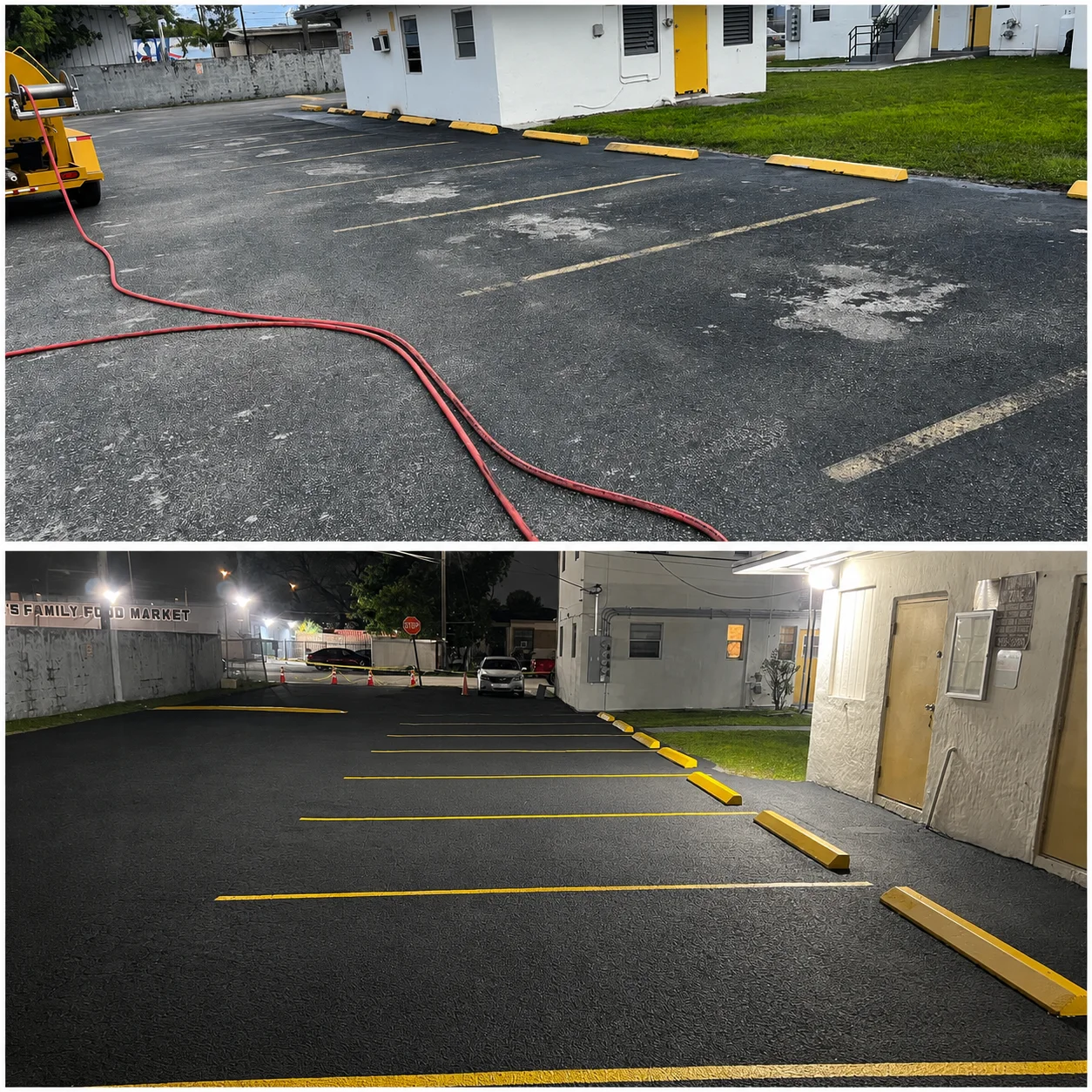
Before and after: a worn lot re-striped with yellow stall lines and wheel stops. Fire lanes work best laid out with the rest of the striping so stalls, aisles, and lanes line up.
Curb Paint, Pavement Stenciling, and Signs: Which Do You Need?
| Marking | What it does | Typical use |
|---|---|---|
| Painted curb | Marks the curb face and top along the lane, usually with stenciled wording | Lanes that run along a raised curb at a building or along landscaped islands |
| Pavement stripe and stenciling | Marks lane edges and wording on the asphalt | Lanes with no curb, or where the AHJ wants pavement markings |
| Post-mounted sign | Gives notice drivers and enforcement can point to | Where the AHJ requires signs in addition to paint, often spaced along the lane |
Which combination you need, the color, the wording, and the spacing are set by your AHJ. Bull's Eye offers curb painting, pavement striping, and sign installation.
How Often Does Fire Lane Paint Need Redoing?
No single repaint interval is set in the statewide code; it is an AHJ-level decision, and the real test is whether the lane is clearly legible when the inspector arrives. In South Florida, sun, summer rain, and tire traffic wear paint, curbs fade faster than flat pavement, and a lane that is chipped, stained, or hard to read is a lane drivers park in. A reasonable maintenance habit is to look at your lanes each spring and after any resurfacing or sealcoating, since sealcoating covers existing markings and the lanes need to be re-marked afterward. If you are sealcoating anyway, Bull's Eye can sealcoat and stripe in the same visit so the lot is closed once.
What a Proper Fire Lane Job Involves
- Confirm the spec. Start from the fire marshal's requirement or the approved site plan; if there is none on hand, ask the fire marshal what applies. Do not guess at the color.
- Walk the lane. Measure the lane, note obstructions (hydrants, dumpsters, landscaping, parked vehicles), and flag anything paint cannot fix.
- Prep the surface. Good practice is to clear dirt, oil, loose material, and old flaking paint so new paint bonds to the curb or pavement.
- Mark out and paint. Lines and stencils are laid out to the specified wording and spacing before painting.
- Sign and review. Signs are set where required, and the finished markings are reviewed against the specification.
A note on timing: paint needs dry pavement, so rain can delay outdoor marking, and fresh markings need to be kept clear of vehicles until they set. Bull's Eye can schedule commercial and HOA work in phases, overnight, or on weekends to limit disruption.
Common Fire Lane Problems
- Faded paint that is fully legible to the owner but not to a driver at night or in the rain.
- Lanes re-marked in the wrong color after a repaint because no one checked the current spec.
- New parking stalls striped into what should have been the lane, usually after a restripe done without the site plan.
- Sealcoating that covered the old markings with nothing put back.
- Signs missing, bent, or tilted, so the paint is the only notice.
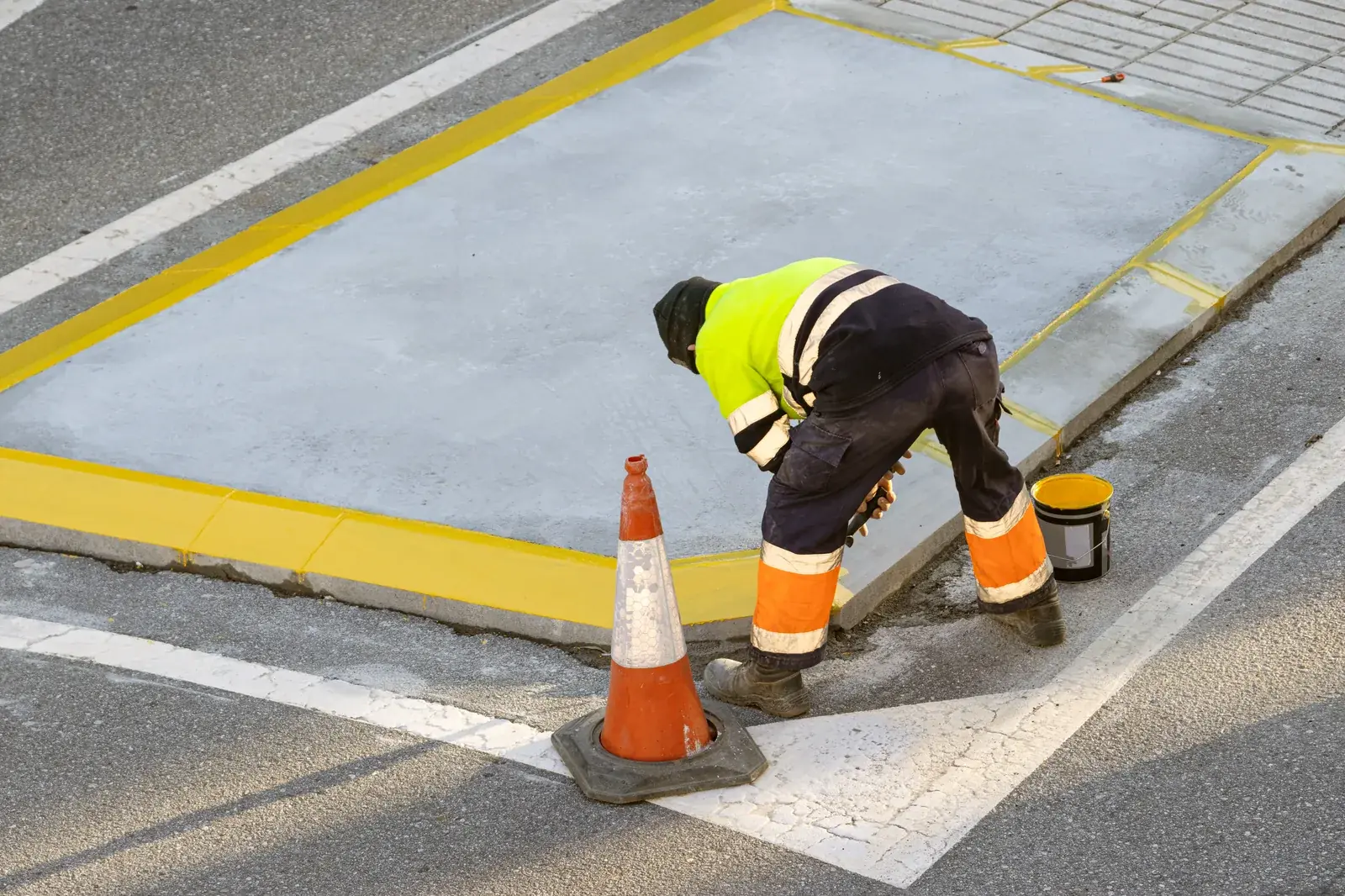
Curb edges take sun and rain directly, which is why they are often the first marking to fade.
Request an Estimate
Whether you are repainting a faded fire lane, marking a new one, or fixing a citation, request a free on-site estimate or call (305) 710-4512. Have your fire marshal's specification or site plan handy if you can; if not, your fire marshal can tell you what applies. Fire lane marking often goes hand in hand with parking lot striping and, for accessible stalls, ADA striping and signage. See our FAQ for more.
Serving Cutler Bay and Nearby Communities
We're based in Cutler Bay and offer fire lane painting for HOAs, commercial properties, and businesses throughout the area, often as part of a full parking lot striping job. We also serve nearby Palmetto Bay, South Miami Heights, Goulds, Naranja, Princeton, Perrine and West Perrine, Richmond Heights and Richmond West. Not sure if your property is in our service area? Just give us a call.


