

Manufacturer specifications call for at least 24 hours of cure after the final coat before vehicles use the surface, with dry weather and temperatures of 50 degrees F and rising. Rain inside that window is the most common reason a sealcoat job goes wrong, and South Florida's wet season makes timing the real challenge. This guide explains the rules, what changes drying time, and what a failed cure looks like.
The Rules Manufacturers Write Down
Sealer manufacturers publish specific application conditions, and they agree closely. SealMaster's application specification for its MasterSeal concentrate says surface and ambient temperature must be a minimum of 50°F and rising during application, that the sealer should not be applied when temperature is expected to drop below 50°F during application and for at least 24 hours afterward, and that each coat must dry thoroughly before the next. It also says the final coat should dry for 24 hours before opening to vehicle traffic. SealMaster's engineering specification adds: do not apply if rain is forecast within 24 hours, and a minimum of two coats are recommended. Its FAQ repeats the 24-hour traffic wait and the 24-hour rain limit. These are one manufacturer's documents for its own products, so a contractor using a different sealer should be able to show you that product's instructions.
| Condition | What the manufacturer specification says |
|---|---|
| Temperature | Surface and air at least 50°F and rising; not dropping below 50°F for 24 hours after |
| Rain | Do not apply if rain is forecast within 24 hours |
| Between coats | Let each coat dry thoroughly before the next |
| Before traffic | Final coat dries about 24 hours before vehicles |
| Coats | Two coats recommended as a minimum |
How Long Until You Can Walk or Drive on It?
Plan on about a day off the surface for vehicles, and longer if the weather is cool, humid or shaded. The 24-hour figure is the manufacturer minimum for opening to vehicle traffic; it is a minimum under normal drying conditions, not a promise for every day. Online articles quote a wide spread, from a few hours to dry to the touch up to two or three days before heavy vehicles, which is why asking the contractor for a stated time on the day of the job is more useful than any generic number.
- Foot traffic and pets: keep off until the surface is dry to the touch, and keep paws and shoes off beyond that when in doubt.
- Cars: manufacturer minimum is about 24 hours after the final coat.
- Trucks, trailers, delivery vehicles and dumpster service: no manufacturer figure was found, so ask the contractor; a longer wait is the cautious choice.
- Full hardness: sealer continues to harden over days to weeks. A tire mark or footprint early on is common; deep tracking or a sticky surface well past the stated time is not.
What Slows or Speeds Up Cure
Sealer cures as water leaves it, so anything that slows evaporation slows the cure. The main factors are temperature, humidity, sun and wind, shade, and how thick the coat was applied. Cool, still, humid air and shaded pavement take longer. Warm, dry, breezy conditions in full sun go faster. A thick coat takes longer than a thin one, which is one reason two thinner coats are recommended over one heavy pass. Sealers also vary by manufacturer and product type, so follow the product's data sheet.
Why the 24-Hour Rain Rule Exists
Fresh sealer that gets rained on before it dries can wash out, thin, streak or lose its bond to the pavement. The sealer is an emulsion, which is asphalt suspended in water, and it needs to lose that water and set. Rain interrupts that. The rule is not about a single drop; it is about avoiding a forecast with meaningful rain inside the window. This is also why a contractor who moves a job instead of gambling on a forecast is protecting the result, not stalling.
South Florida's Wet Season and Scheduling
The National Weather Service in Miami defines the wet season as roughly May 15 to October 15, and it brings about 60 to 70 percent of the year's rainfall. In practice, South Florida afternoons in summer often bring storms, so a morning that looks clear may not stay that way. Three things help: start early so the first coat dries before afternoon storms, check the forecast for the whole 24-hour window instead of just the working day, and allow the job to move. Dry-season months give the most dependable windows, but a dry stretch in any month can work. Phased or overnight scheduling can help on commercial lots, and Bull's Eye offers phased, overnight and weekend scheduling for commercial and HOA work.
Sprinklers, Dew and Other Water You Can Control
Rain is not the only water that can ruin a fresh coat. Irrigation spray, heavy dew, pressure washing nearby and leaking hoses all deliver water to the surface. Turn off sprinklers that reach the pavement the night before and the night after, and move pots and hoses off the area. On shared properties, notices to residents should include the sprinkler schedule as well as the no-parking window.
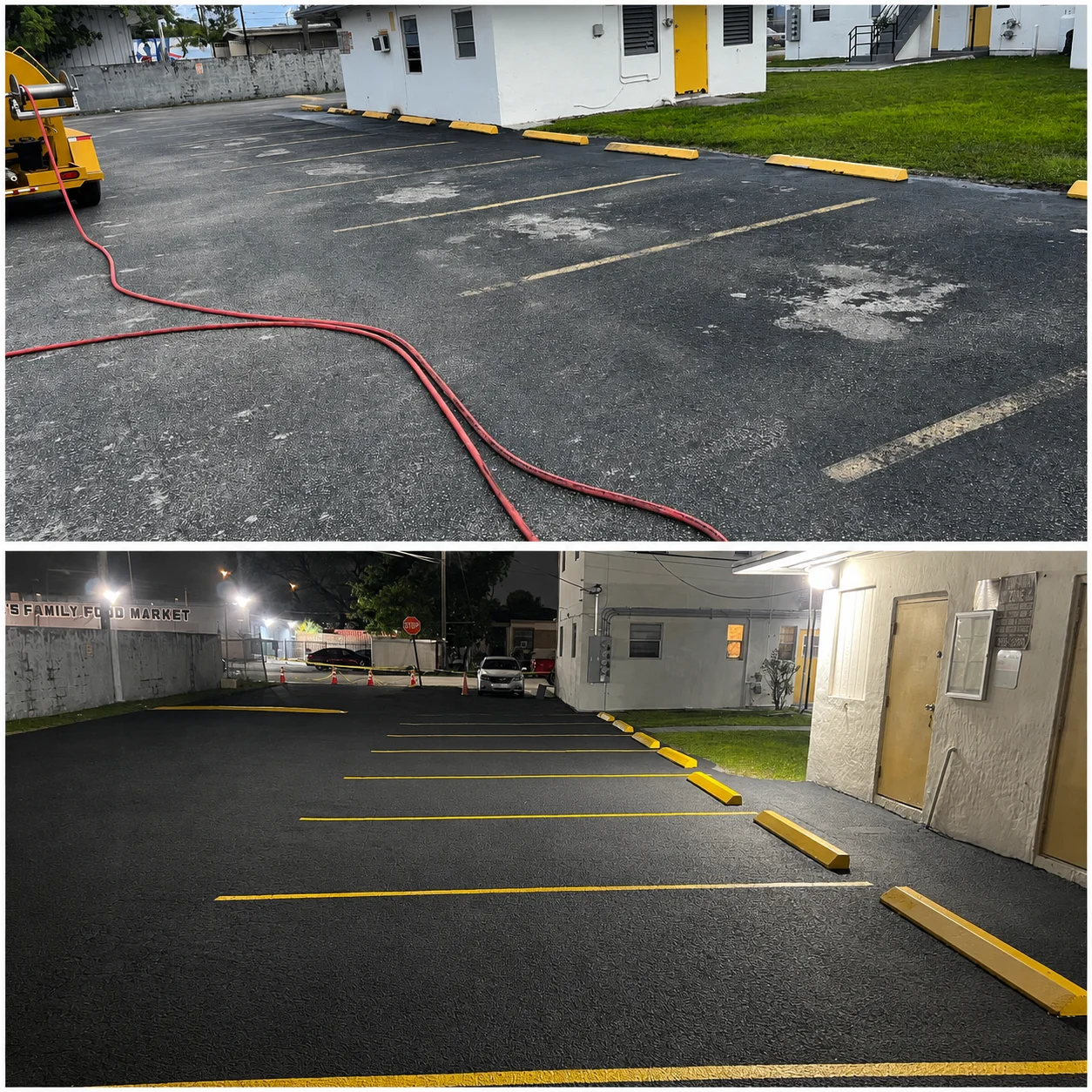
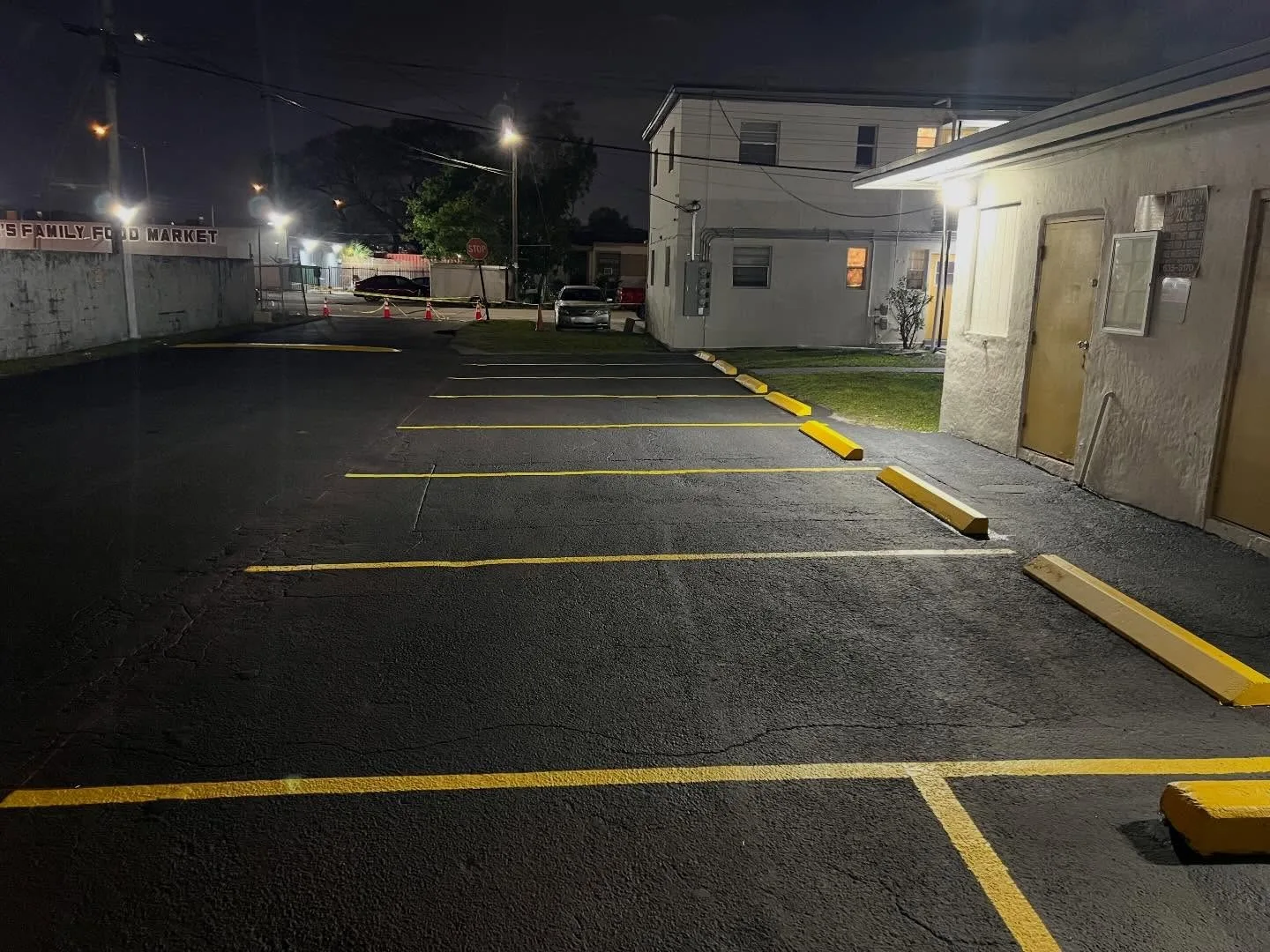
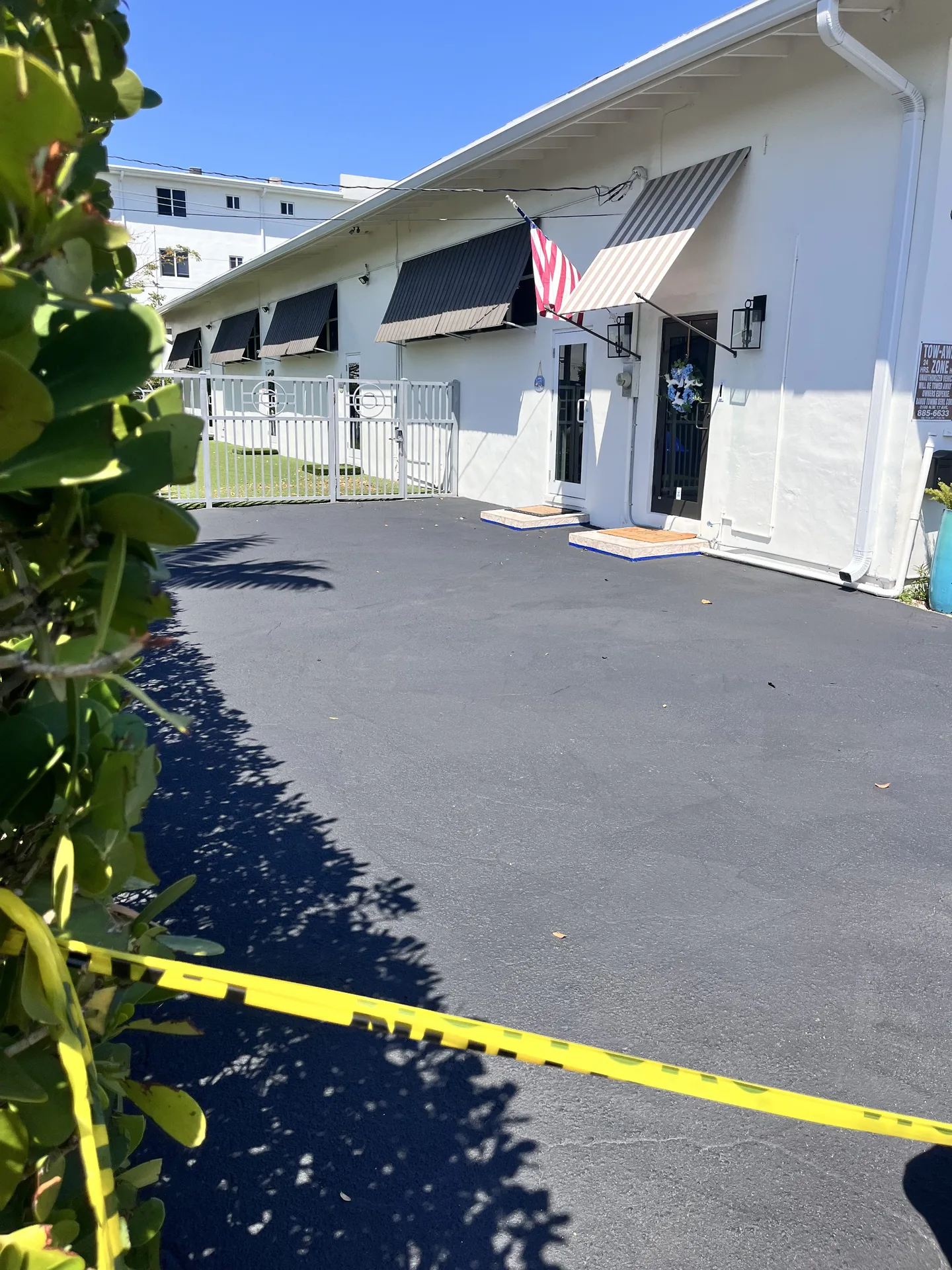
A freshly sealcoated and striped commercial lot. Fresh sealer needs a dry, traffic-free window to cure.
Preparation Affects Cure, Too
Sealer cures well only if it bonds to a clean, dry surface. Dirt, leaves, standing water in low spots and oil stains all interfere. Good practice is to clean the surface, prime oil spots and fill cracks before any sealer goes on, and to let hot-pour crack filler cool and set first. Bull's Eye cleans the surface, primes oil spots and fills cracks with hot-pour rubberized filler before sealcoating, then applies two coats. Pavement that still holds water from a recent storm can trap moisture under the coat, so pavement should be dry before the job starts, including low spots where water lingers.
If you are wondering whether your pavement needs sealing at all before worrying about cure time, see our notes on what drives sealcoating cost and our guide to when sealing is due. Sealing pavement that does not need it spends the money and still subjects you to the closure.
What a Failed Cure Looks Like
A failed or weakened cure shows up in a few recognizable ways, and the earlier you report it, the better. Complaints about sealcoating found in consumer reports and forums repeat the same themes: peeling, stickiness, tire marks that do not fade, and sealer tracked into garages and homes.
- Tacky or sticky surface well past the stated cure time, which can mean the coat was too thick, the weather was too cool or humid, or the product was over-diluted.
- Streaks or washed-out areas that follow the path of rain or sprinkler water.
- Peeling or flaking, often where the surface was dirty, oily or damp when sealed.
- Deep tire scuffs from turning wheels, which can happen early on even with a good job.
- Tracking of black sealer onto concrete, carpets or shoes.
If something looks wrong, keep traffic off, take photos, and call the contractor promptly. Ask what the product's data sheet says about cure conditions on that day.
Questions to Ask Your Contractor
- What forecast conditions will make you postpone, and how much notice do I get?
- When can cars use the surface, and when can trucks and delivery vehicles?
- Which sealer is being used, and can I see its data sheet?
- How is rain, dew and irrigation handled?
- Who do I call if the surface is still tacky after the stated time?
Planning the Closure on a Commercial or HOA Lot
- Pick a dry window. Choose dates with backup days in case of rain.
- Notify early. Tell tenants, residents and delivery services which sections close and when.
- Close sections in phases. Keeping part of the lot open reduces disruption; Bull's Eye can phase the work.
- Stripe after cure. Line marking goes on once the sealer is dry enough. Bull's Eye can sealcoat and stripe in the same visit.
- Reopen only when told. Barricades and cones should stay until the stated time.
For timing and condition questions before the job, see how often to sealcoat in Florida and sealcoating vs overlay vs repaving. For the services themselves, see driveway sealcoating and commercial parking lot sealcoating.
Book Around the Weather
Call (305) 710-4512 or request the free on-site estimate. Bull's Eye is at 8260 SW 184th St in Cutler Bay and serves Palmetto Bay, South Miami Heights, Goulds, Naranja, Princeton, Perrine, West Perrine, Richmond Heights and Richmond West. Hours are Monday to Friday 7 to 5 and Saturday 8 to 12. One customer said the multifamily sealcoating and striping job was “very easy.” More answers are in the FAQ.