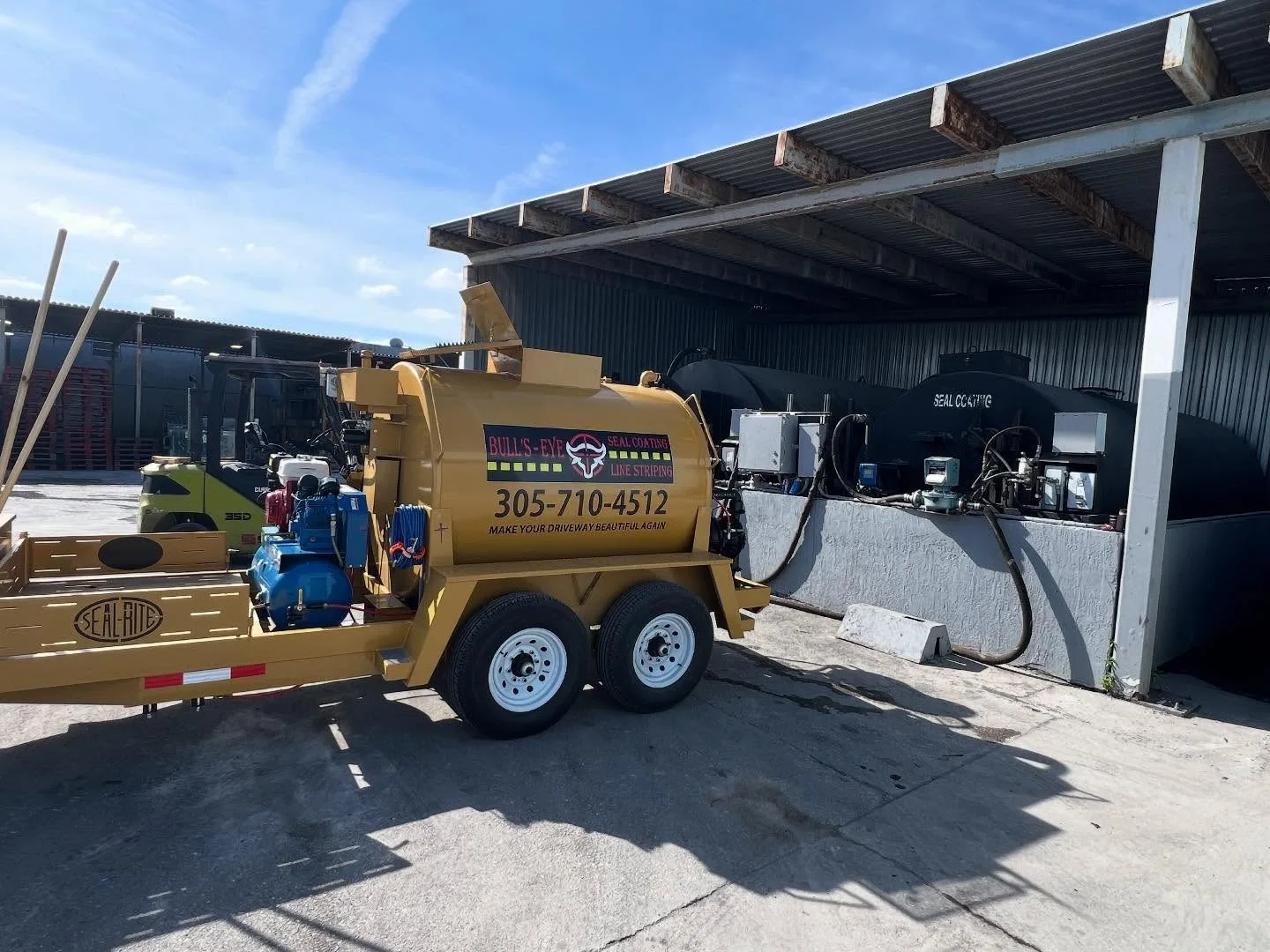

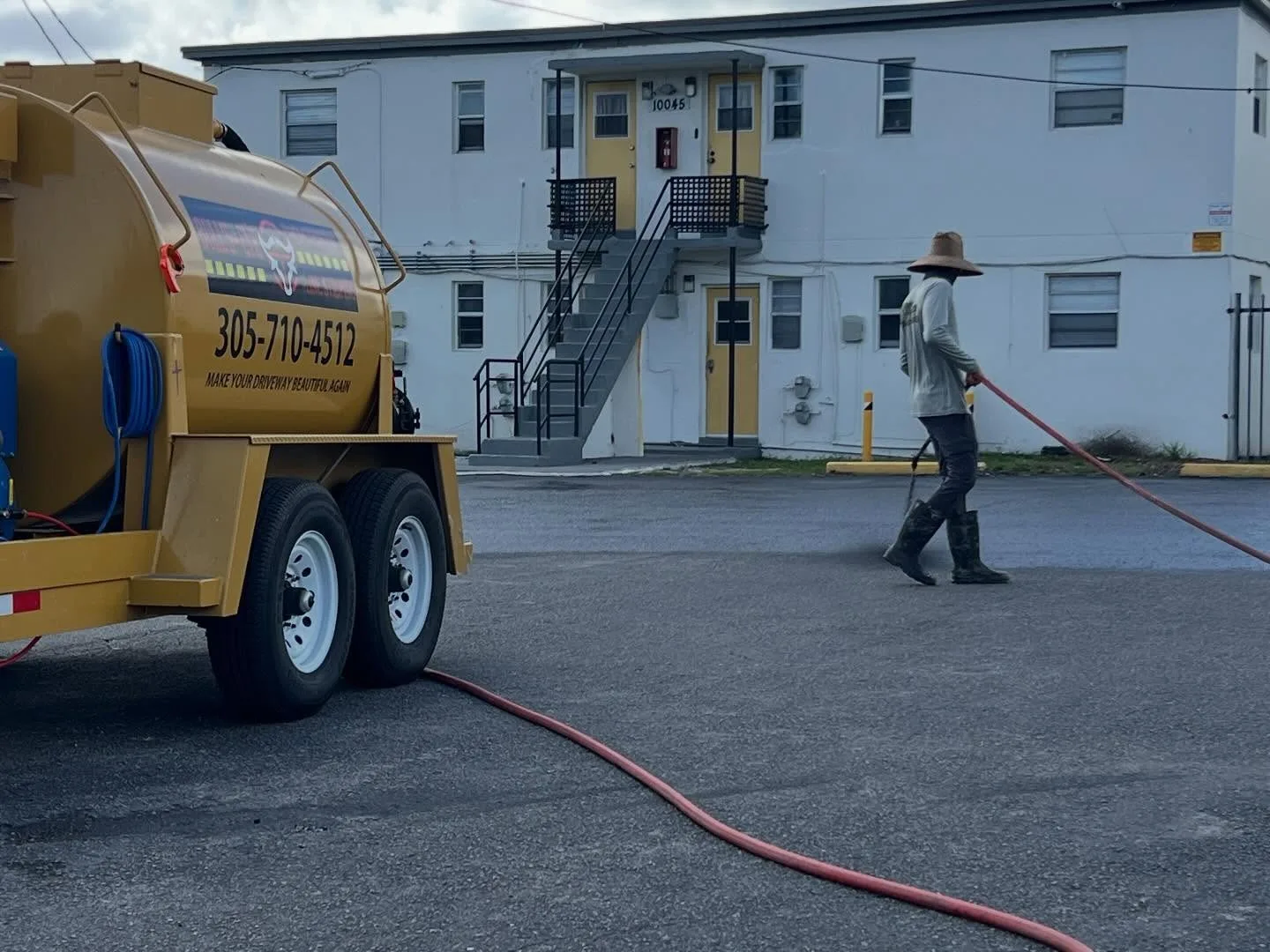

Bull's Eye sealcoats commercial lots, apartment communities and HOA parking areas in Cutler Bay and south Miami-Dade, with crack filling first and striping in the same visit. Jobs can be phased, and overnight or weekend work is available, so tenants and customers can keep using the property. Proof of insurance is available on request.
What's Included
- Surface cleaning, oil-spot priming and crack filling before sealing
- Two-coat sealcoat application across drive aisles and stalls
- Phased, overnight or weekend scheduling for commercial and HOA work
- Fresh striping, ADA markings and fire lanes in the same visit
- Works with HOA boards and property managers
- General liability insurance, proof provided on request
Why Property Managers and HOA Boards Seal Their Lots
Asphalt is a major capital asset, and sealcoating is the routine maintenance that slows its aging. A sealcoat shields the surface from UV oxidation, fuel and oil, and water, and gives the lot a uniform, fresh look. The key is timing: sealcoat sound pavement, repair failed pavement, and do not confuse the two.
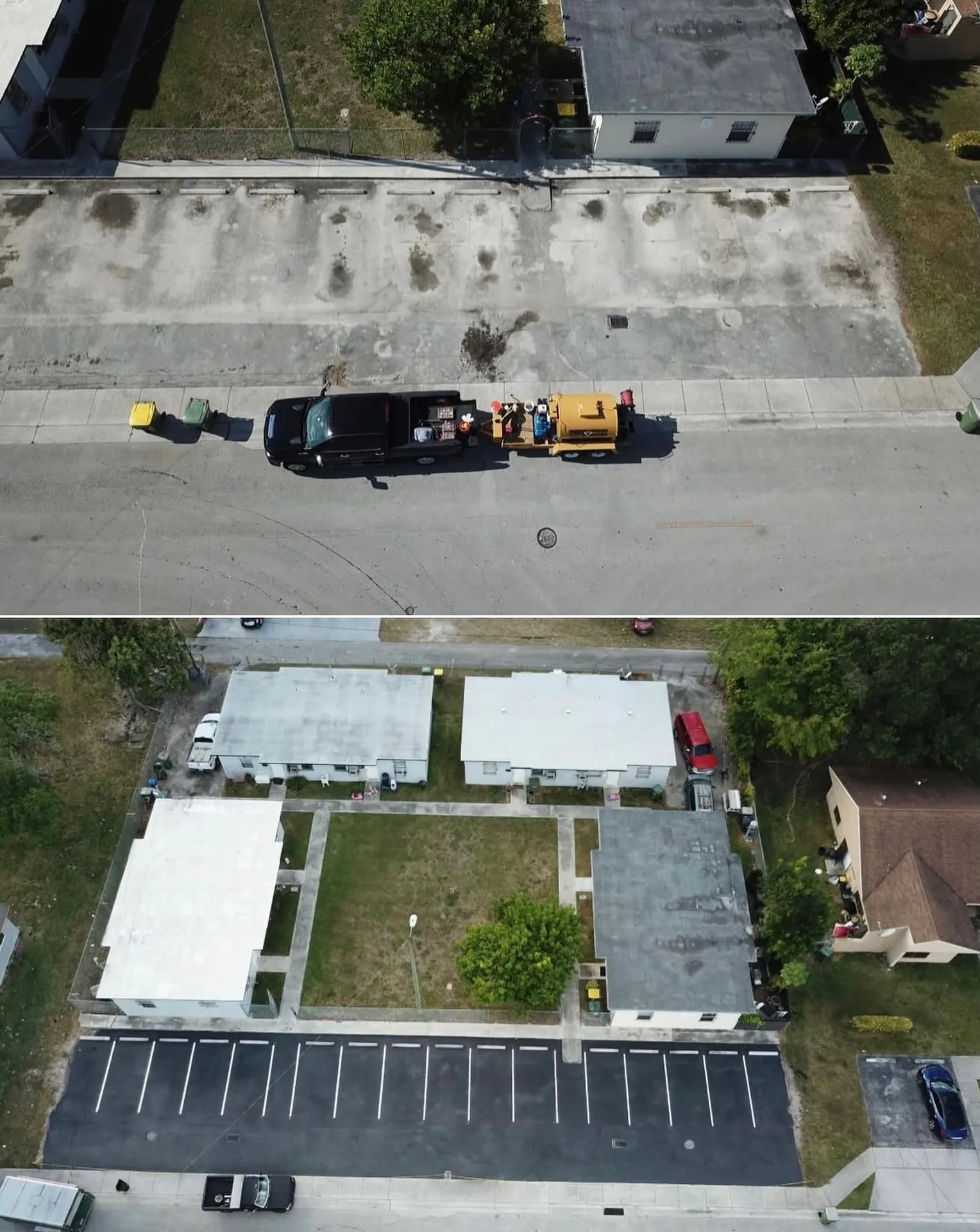
An apartment lot before and after sealcoating and fresh striping.
Sealcoat, Repair or Resurface? A Decision Guide
| Condition of the lot | Typical recommendation |
|---|---|
| Faded to gray, minor surface wear, few small cracks | Crack fill and sealcoat |
| Many open cracks, otherwise solid | Crack sealing first, then sealcoat |
| Potholes or failed spots in an otherwise sound lot | Patch the failures, then sealcoat |
| Widespread alligator cracking, drainage ponding, soft base | Overlay or reconstruction; sealer will not fix this |
| Recently paved | Wait; the Asphalt Institute says new low-traffic pavement may not need sealing for about 2 to 5 years |
What a Commercial Sealcoat Job Includes
- Site walk and estimate. A good estimate measures the lot and notes cracks, drainage, oil areas and stall layout, so the price covers the actual work. Bull's Eye offers free on-site estimates.
- Phasing. Large lots are commonly divided into sections so part of the property stays usable. Bull's Eye schedules in phases, overnight or on weekends for commercial and HOA properties that cannot lose parking in the day.
- Notice for occupants. Good practice is to give tenants, staff or residents advance notice and a clear time to move vehicles, which is where working with property managers and HOA boards matters.
- Clean the surface. Debris, dirt and loose material are removed so the sealer bonds to pavement rather than dust.
- Prime oil spots and fill cracks. Oil and fuel spots are primed. Cracks are hot-pour filled with rubberized material before sealing.
- Apply two coats. Two coats give fuller, more even coverage than a single pass.
- Allow for cure. Sealed areas need to stay closed to traffic until the sealer is ready. Weather and humidity affect drying.
- Re-stripe. Sealcoat and parking lot striping can be done in the same visit, so stall lines, arrows and markings go back on and the lot is not disrupted twice.
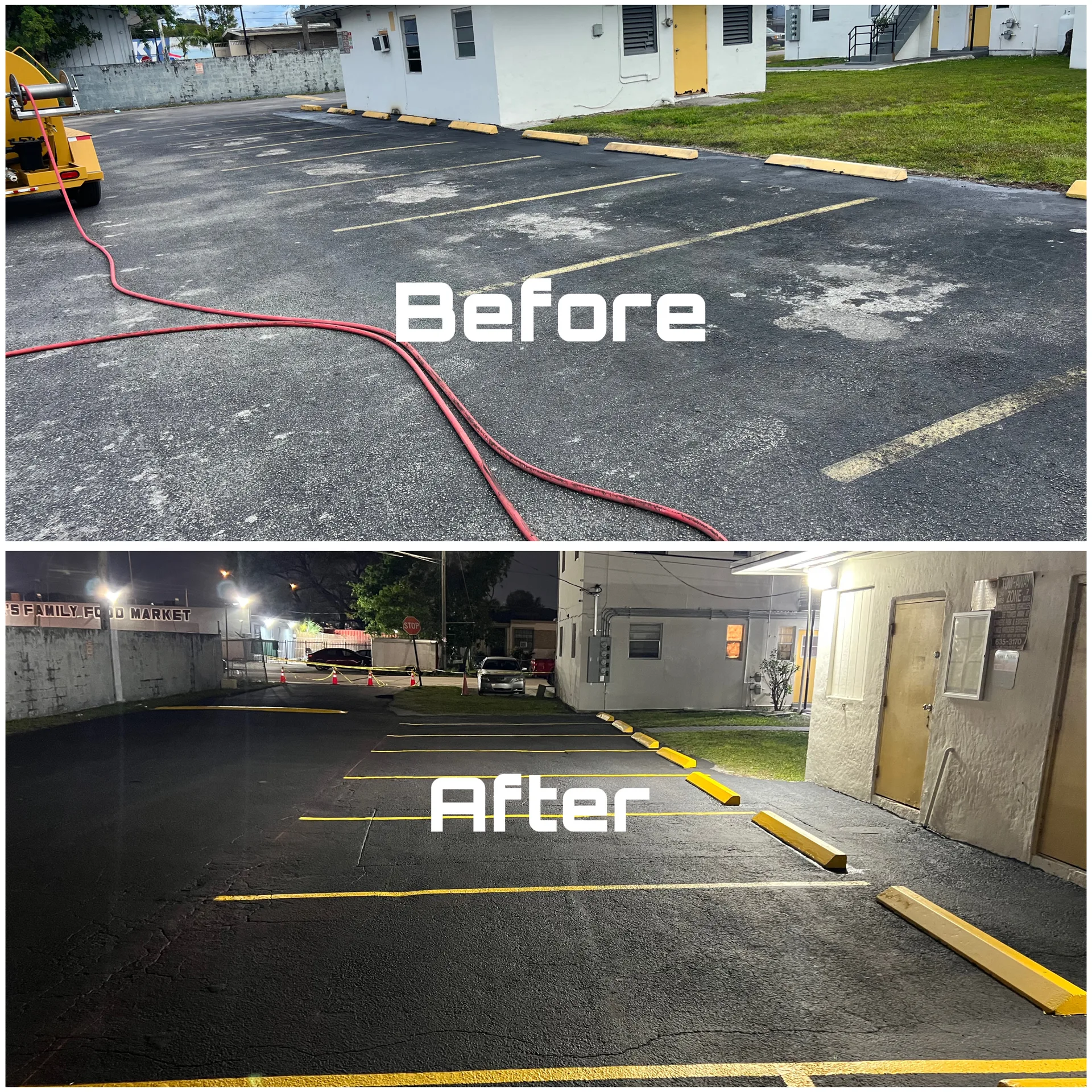
Sealcoating and striping completed as one project.
Re-Striping, ADA and Fire Lanes After Sealcoating
Sealcoating covers existing paint, so layout needs to be re-established. This is a good moment to check accessible spaces, access aisles and fire lanes. The U.S. Department of Justice ADA guidance on restriping notes that restriping gives an opportunity to provide accessible spaces and that standard accessible spaces need a 60-inch access aisle, with van-accessible spaces and signage requirements as well. Fire lanes and local markings are set by the local authority having jurisdiction, so confirm requirements with your property's fire marshal or code official. See ADA striping and signage and fire lane painting. This is not legal advice.
Scheduling Around South Florida Weather
Specifications from public agencies and trade guidance agree that sealer should go on dry pavement, at roughly 50°F and rising or warmer, with no rain expected for about 24 hours. South Florida's wet season runs roughly mid-May to mid-October. For a large lot done in phases, that means weather can move individual phases, and tenant notices may need updating. It is better to move a phase than apply sealer into a storm.
What HOA Boards and Property Managers Ask
- Insurance. Bull's Eye carries general liability insurance and can provide proof for your records or board approval.
- Disruption. Phased, overnight and weekend scheduling is available for commercial and HOA work.
- Communication. One customer, a multifamily property, said Bull's Eye worked with their staff and tenants and made the sealcoating and striping job very easy.
- Bids. When comparing bids, ask each bidder for measured square footage, the number of coats, crack-fill scope, striping scope and phasing, so you compare like for like.
Common Mistakes to Avoid
- Sealing over open cracks. Water keeps reaching the base; fill first.
- Sealing too early or too late. New pavement does not need it yet, and failed pavement needs repair instead.
- Applying into weather. Rain within about 24 hours, or cool, humid conditions, can ruin or slow the cure.
- Poor notice to occupants. Cars left in a closed section cause delays and tracked sealer. Clear signs and notice avoid this.
- Forgetting the striping. A fresh black lot without lines creates parking confusion; plan striping in the same visit.
What Drives Commercial Sealcoating Cost
Total square footage is the main driver, followed by crack length, oil and patch areas, number of coats, striping scope, and how complicated the phasing is. Prices found online vary widely, so no per-square-foot number is given here. The estimate is free and should show exactly what is included.
Serving Cutler Bay and Nearby Communities
We are based at 8260 SW 184th St in Cutler Bay and serve Palmetto Bay, South Miami Heights, Goulds, Naranja, Princeton, Perrine and West Perrine, Richmond Heights and Richmond West.
Request a Free Lot Estimate
Call (305) 710-4512 or request a free on-site estimate. We are available Monday to Friday 7 to 5 and Saturday 8 to 12. Need work on a home driveway instead? See driveway sealcoating, or read the FAQ.


