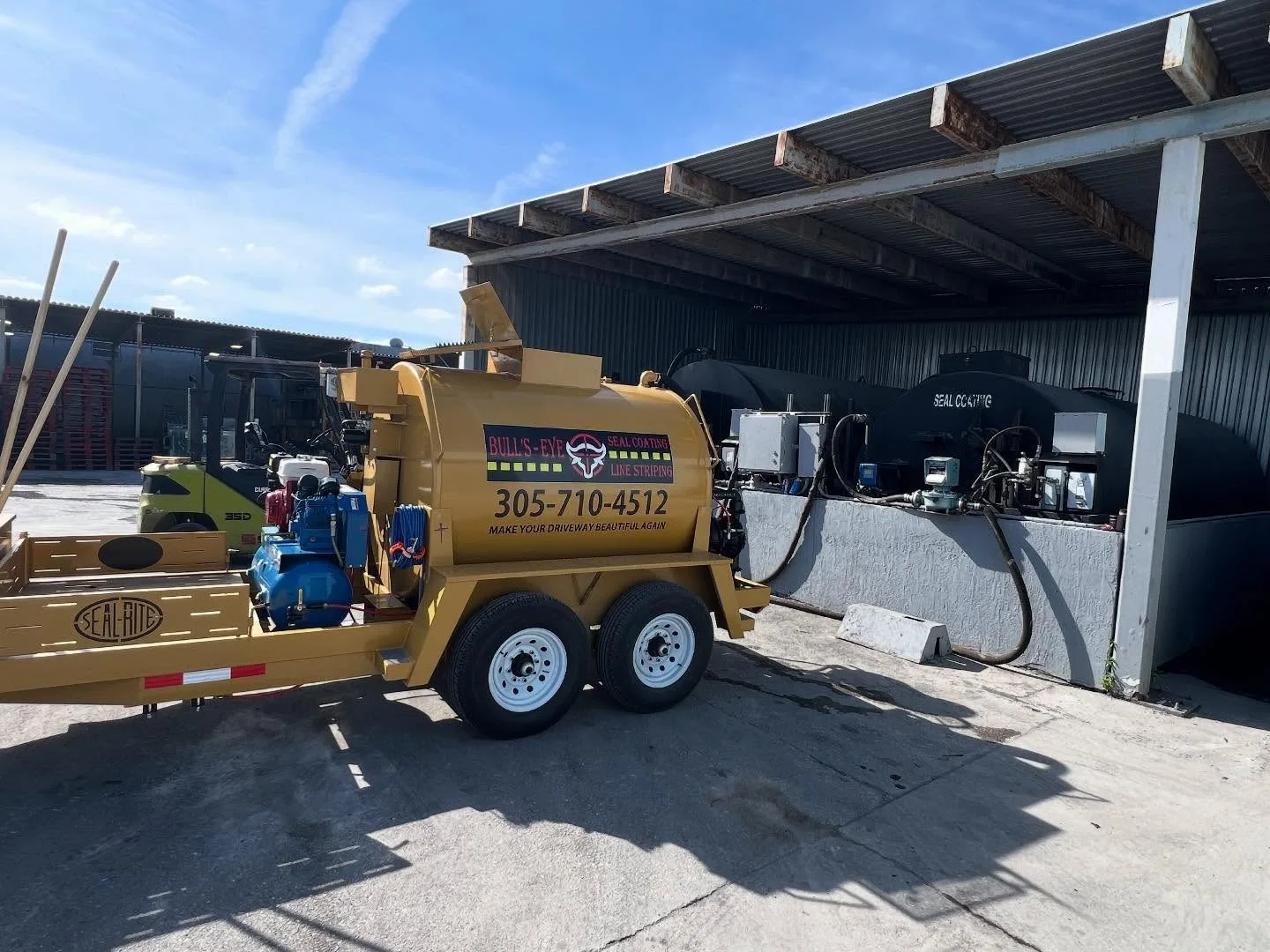

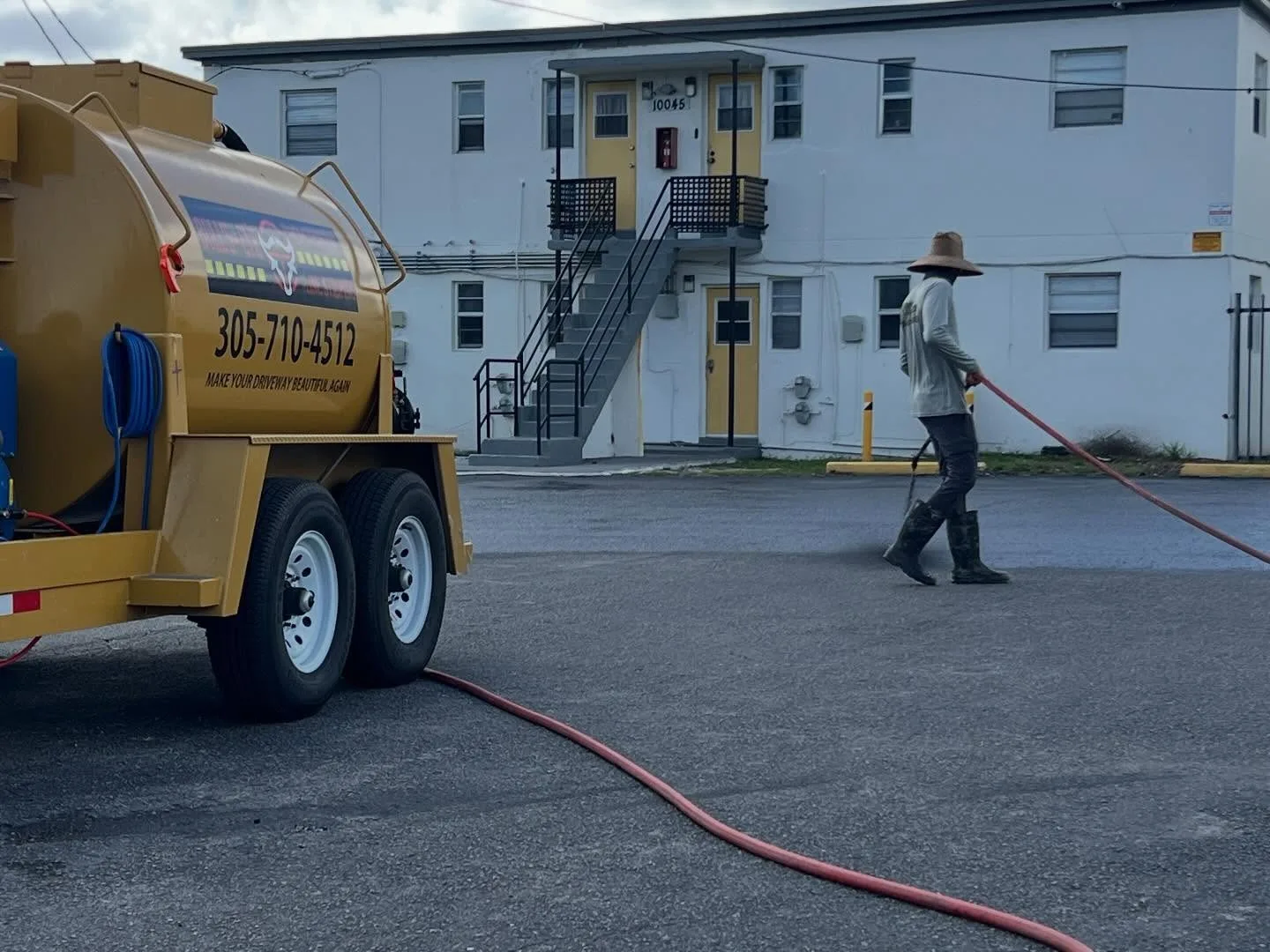

A board does not just pick a contractor: it funds the work from reserves, collects comparable bids, notifies residents and sequences closures so people can still park. Bull's Eye Seal Coating & Line Striping works with HOA boards and property managers and schedules commercial and HOA work in phases, overnight or on weekends. This guide walks through how Florida associations typically approve a pavement project and how to compare the bids that come back.
What's Included
- How pavement projects fit into an HOA or condo budget and reserve plan
- What Florida statutes say about bids and board meeting notice (with citations)
- A bid-comparison table so every proposal covers the same scope
- Phasing, resident notices and closure planning for occupied communities
- Striping, ADA stalls and fire lane markings after sealcoating
- Free on-site estimates, with insurance proof available for board records
How an HOA or Condo Board Gets a Pavement Project Approved
Most association pavement projects follow the same path: a condition review, a budget line, a set of bids, a board vote at a noticed meeting, and a resident notice schedule. Knowing the steps in order keeps a volunteer board from getting stuck at the vote with incomplete bids or no funding source.
- Assess the pavement. Walk the lots and roads with the property manager or a board member and note cracking, potholes, ponding after rain, faded striping and trip hazards. Photos with dates help the board compare conditions year to year.
- Match the condition to a fix. Faded but sound asphalt with small cracks is a sealcoating candidate once the cracks are filled. Widespread alligator cracking or soft spots point toward resurfacing. The guide on sealcoating vs overlay vs repaving explains the thresholds.
- Check the reserve study and budget. Find out whether pavement is a funded reserve item, when it is scheduled, and how much is set aside. A shortfall changes whether the board can pay from reserves, phase the work over two budget years, or consider a special assessment.
- Collect written bids. Request proposals on the same scope (see the comparison table below). Many associations are required to bid larger contracts, covered in the next section.
- Vote at a properly noticed board meeting. Put the contract on the posted agenda, attach the bids, and record the vote in the minutes.
- Sign a written contract and notify residents. Confirm dates, closure areas and rain-day rules in writing, then send notices.
What Florida Statutes Say About Bids, Budgets and Meetings
Florida law sets bid and notice rules that differ between condominium associations and homeowners' associations. The citations below were checked against the statutes published on the Florida Legislature's website (leg.state.fl.us); this is not legal advice, and your board should confirm current wording and your own governing documents with the association's attorney.
| Topic | Condominium (Chapter 718) | Homeowners' association (Chapter 720) |
|---|---|---|
| Competitive bids | Required when a contract for materials, equipment or services exceeds 5 percent of the total annual budget, including reserves. The board is not required to accept the lowest bid. s. 718.3026(1) | Required when a contract requires payment exceeding 10 percent of the total annual budget, including reserves. The board is not required to accept the lowest bid. s. 720.3055(1) |
| Contracts in writing | Contracts for services and contracts not fully performed within one year must be in writing. s. 718.3026(1) | Same principle: contracts for services must be in writing. s. 720.3055(1) |
| Reserves for pavement | Budgets must include reserve accounts for capital expenditures and deferred maintenance, including at least roof replacement, building painting and pavement resurfacing. s. 718.112(2)(f)2.a. | Reserve accounts are permitted in the budget; whether they are required depends on how the association established them and its governing documents. s. 720.303(6)(b) |
| Board meeting notice | Notice with agenda items posted conspicuously at least 48 continuous hours before the meeting, except in an emergency. s. 718.112(2)(c) | Notice with agenda items posted in a conspicuous place at least 48 hours in advance, or mailed or delivered at least 7 days before, except in an emergency. s. 720.303(2) |
How to Compare Parking Lot Bids Fairly
Three bids that describe three different jobs cannot be compared on price. The most common problem on a board's desk is a low number that quietly leaves out crack filling, striping or a second coat. Ask every bidder for a line-item scope so the board is comparing like with like.
| Line to compare | What to ask for | Why it matters |
|---|---|---|
| Measured area | Square footage by lot or street, and how it was measured | Price differences often come from different quantities, not different rates |
| Crack repair | Hot-pour rubberized crack sealing, linear feet, done before sealcoating | Sealer alone does not bridge open cracks; see crack filling and sealing |
| Patching | Number and size of pothole or failed-area repairs, and method | Failed areas under a coating reappear; see pothole repair |
| Cleaning and oil spots | Surface cleaning and oil-spot priming included or not | Sealer bonds to clean pavement, not to dust or oil |
| Coats | Number of coats of sealer | One thin pass and two coats are not the same product on the ground |
| Striping | Restriping stalls, ADA stalls, fire lanes, curbs, signs and wheel stops, itemized | If striping is left out, the lot may be closed twice; see parking lot striping |
| Schedule and closures | Phases, working hours (overnight, weekend), cure time before cars return, rain-day policy | This is what residents will actually experience |
| Insurance | Certificate of general liability insurance, and who is named | Boards usually need it for their records |
| Payment terms | Deposit, progress payments, final payment trigger | Avoid paying in full before the work is finished |
Bull's Eye carries general liability insurance and can provide proof on request, including for board approval records. Whichever contractor the board chooses, ask for the certificate before the vote rather than after.
Phasing, Closures and Resident Notice
Residents will accept a closure they were told about and will not accept one they discovered at 6 a.m. Phasing divides the community into zones so some parking is always available, and it is the main reason associations schedule pavement work in stages. Bull's Eye schedules commercial and HOA work in phases, overnight or on weekends, and can sealcoat and stripe in the same visit so each zone closes once instead of twice.
A practical notice sequence
- First notice, about two weeks out: what is being done, which zones, which days, and why. Include a map or lot numbers.
- Reminder, a few days before: the exact zone and hours, where to park instead, and what time cars must be out.
- Day-of signage: temporary signs at each entrance to the closed zone, so a late reader sees them before parking.
- Return notice: when cars can come back, and what to expect in the first days (see below).
- Rain-date line: state upfront that weather can move a zone to the next available day, and how residents will hear about it.
Check the association's rules for temporary parking changes and towing before any notice goes out, and make sure vehicle removal, if any, follows your governing documents and local rules rather than being improvised on the day.
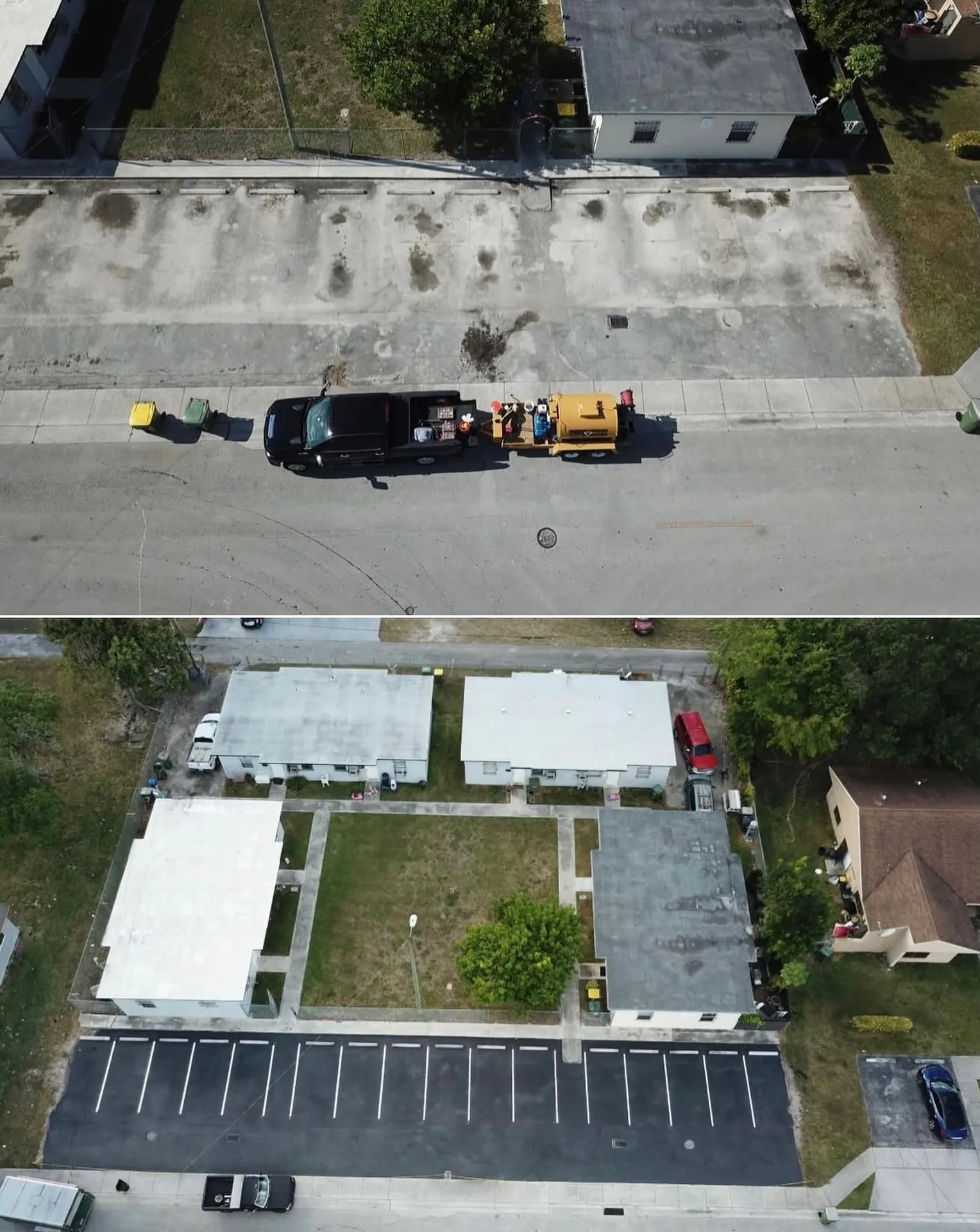
Before and after: multifamily community parking lot sealcoating and striping.
What Residents Should Know the First Days Back
Freshly sealed pavement needs time before it takes traffic, and that time depends on weather, humidity and how thick the coating went down. Ask the contractor for a specific time before cars return, and put that number in the resident notice. In general:
- Keep cars, golf carts, bikes, strollers and pets off the surface until the notice says it is ready.
- Turn off irrigation that hits the pavement the night before and during the cure period.
- Avoid turning the wheel while parked in the first days, since fresh sealer can scuff.
- Light tire marks in the first days can be normal; a surface that is still tacky well past the stated time should be reported to the contractor and the manager.
The guide on cure time and rain in Florida covers why afternoon storms move schedules in the rainy season.
Striping, ADA Stalls and Fire Lanes After Sealcoating
Sealcoating covers existing paint, so every stall line, arrow and symbol has to be reapplied afterward, and this is the moment to correct what was already wrong. Before the lines go back, a board should check three things.
- Accessible stalls. The ADA's guidance on restriping states that when a business or local government restripes a parking facility it must provide accessible parking as required by the 2010 ADA Standards, and that one in every six accessible spaces (never fewer than one) must be van accessible. Which rules apply to a residential community depends on the facility, so ask the association's attorney. See the ADA parking lot requirements guide and ADA striping and signage.
- Fire lanes and red curbs. Fire lane layout is set by the local authority having jurisdiction, not the contractor or the board. Confirm with the fire marshal, then see fire lane painting and the guide to fire lane marking rules in Miami-Dade.
- Guest, reserved and loading stalls. Match the repainted layout to the association's parking rules so the lines and the rules agree. Also decide on wheel stops, curb painting and signs now.
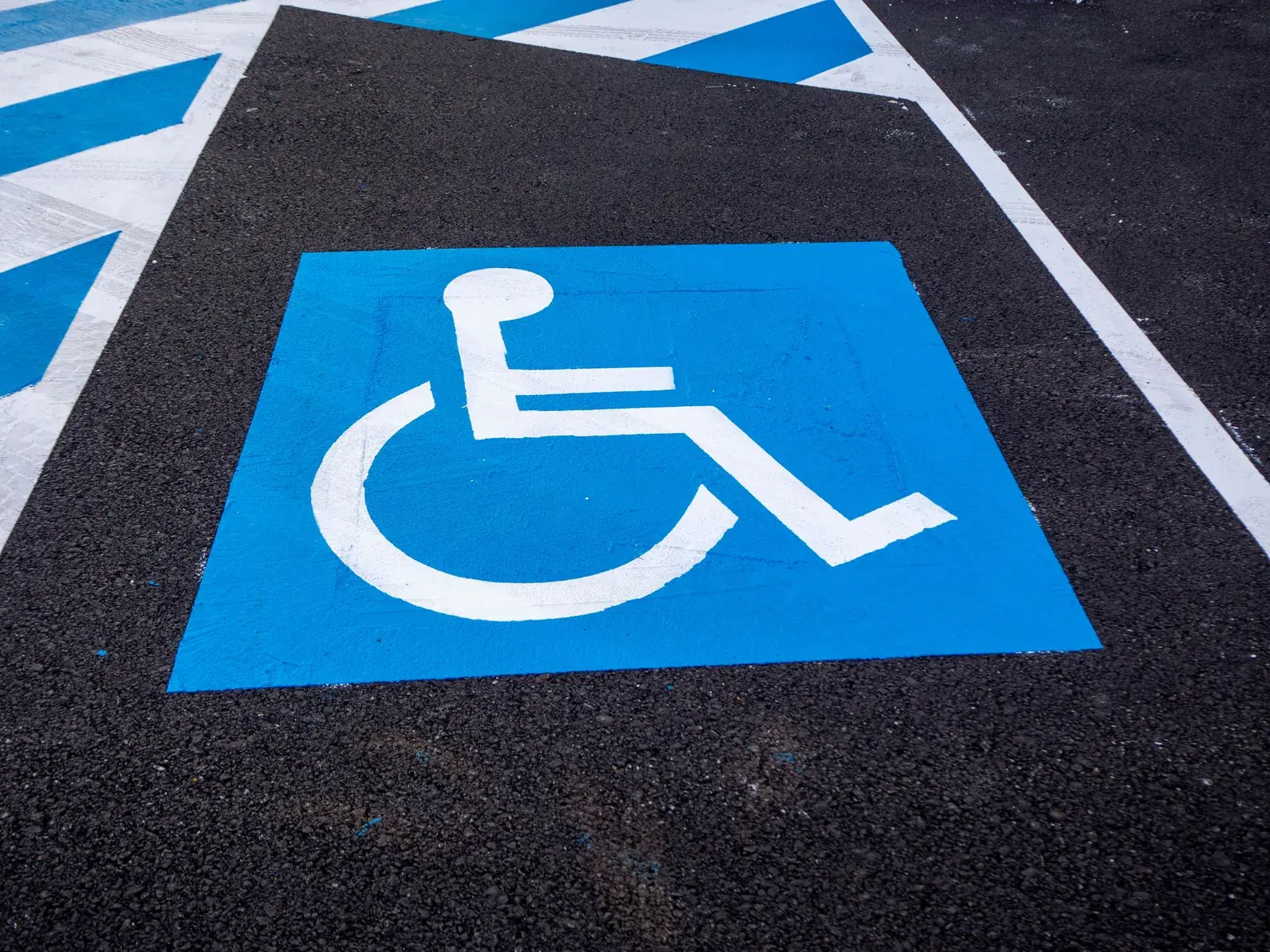
Accessible parking symbol after striping.
Florida Conditions Boards Should Plan Around
South Florida's sun, heat and heavy rain wear pavement from the top down and the bottom up. UV dries the surface binder, while rainwater finds every open crack and flat low spot. Ponding after storms is worth recording in the condition review, since sealcoating does not fix drainage and an overlay may need grade corrections. The rainy season generally runs from late spring into early fall, so many associations book dry-season windows early and keep a rain-date plan for the rest of the year.
Questions a Board Should Ask Every Bidder
- Can you give me a measured, line-item scope for each lot or street?
- Are cracks filled before sealcoating, and with what?
- How many coats, and what time must cars stay off?
- How will phasing and closures work, and who tells residents?
- Is striping, including ADA stalls and fire lanes, in the proposal or separate?
- Can I have the insurance certificate before the vote?
- What happens if it rains on a scheduled day?
Serving Associations in South Miami-Dade
Bull's Eye is based at 8260 SW 184th St in Cutler Bay and works with HOA boards and property managers in Cutler Bay, Palmetto Bay, South Miami Heights, Goulds, Naranja, Princeton, Perrine and West Perrine, Richmond Heights and Richmond West. See the service areas page or the FAQ for more detail, and read about apartment community parking lots if you manage a rental property.
To get a scope and number your board can put on a meeting agenda, call (305) 710-4512 or request a free, no-obligation on-site estimate. Office hours are Monday to Friday 7 a.m. to 5 p.m. and Saturday 8 a.m. to noon.


