

The right fix depends on the condition of the pavement, not on which service costs less. Sealcoating protects asphalt that is still sound, crack filling and patching repair specific defects, an overlay adds a new surface over a stable base, and full replacement is for pavement that has failed from the bottom up. This guide matches what you see on the surface to the treatment that fits, with South Florida conditions in mind.
Start With the Condition, Not the Price
Every treatment on this page is a good choice in the right situation and a waste of money in the wrong one. A sealcoat on pavement with failed base cannot stop it from sinking. A full tear-out of pavement that only needed cracks filled costs many times more than the problem deserved. Look at the surface first, then match it to the table below. If you are unsure which row describes your lot or driveway, a free on-site estimate from Bull's Eye is a simple way to get the surface looked at before any scope is chosen.
Pavement Condition Guide
| What you see | What it usually means | Typical treatment |
|---|---|---|
| Dark, smooth, tight surface, a few hairline cracks | Healthy asphalt, early aging | Wait, or sealcoat when wear shows |
| Gray, faded, rough or sandy surface; stone starting to show | Surface binder oxidizing from UV | Sealcoating (after any crack work) |
| Isolated cracks, single lines, not interconnected | Water entry points; pavement otherwise intact | Crack filling, then sealcoat |
| Individual potholes or small broken areas | Local failure, often from water in a crack | Patching, then address the cause |
| Widespread cracks, raveling, rough ride, but firm underneath | Worn surface on a stable base | Repair defects, then overlay |
| Alligator (interlocking) cracking, rutting, soft or sinking spots, standing water | Base, subgrade or drainage failure | Full-depth repair, or full replacement |
| Surface worn out across most of the area, with base failures across a large share of it | End of service life | Replacement, with drainage and base corrected |
Sealcoating: Protection, Not Repair
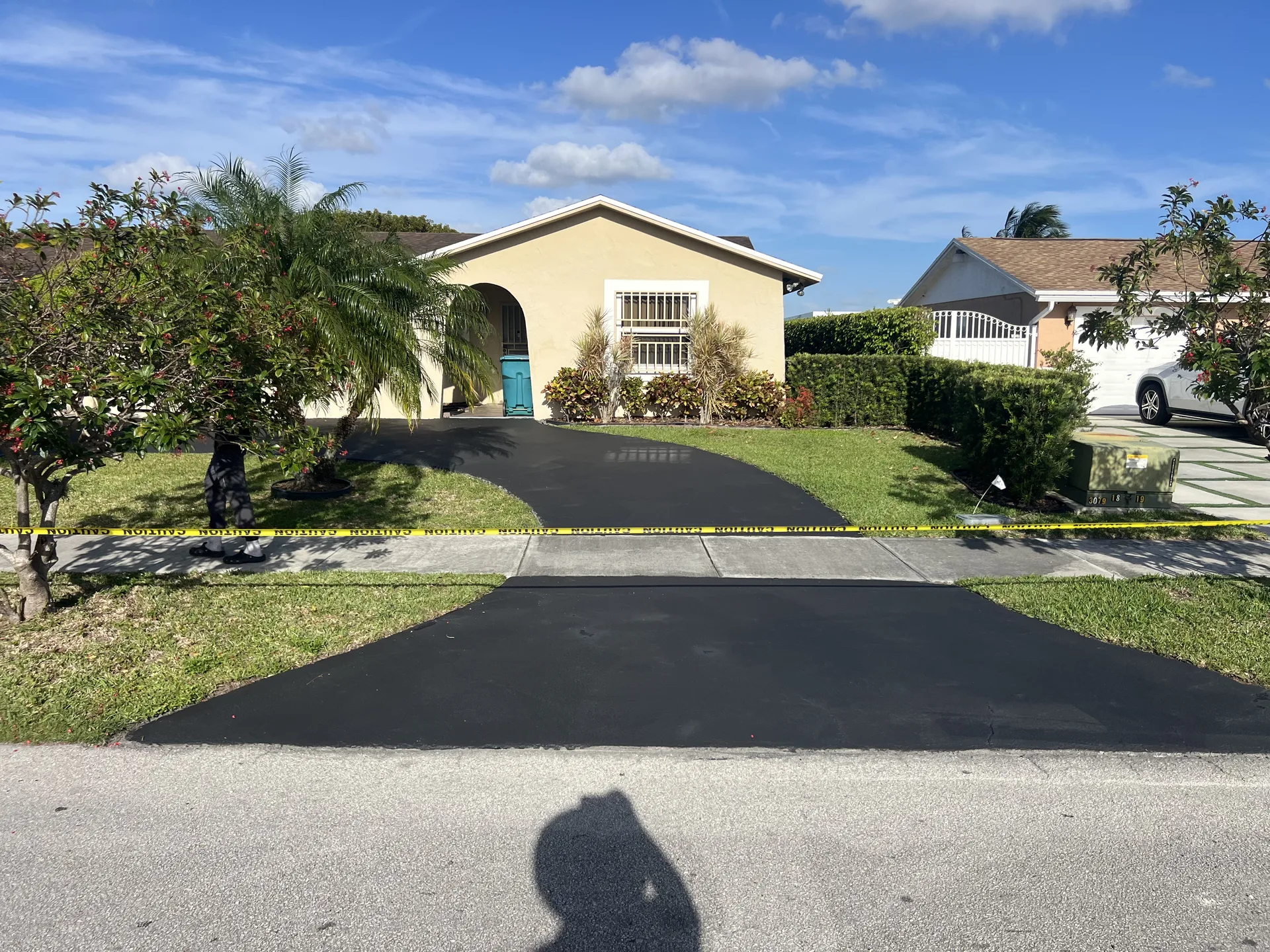
Sealcoating is a thin protective layer that slows UV oxidation and keeps water and oil from soaking into the surface. The Asphalt Institute describes sealing as appropriate once pavement has become dry and brittle with age, to seal small surface cracks and voids, and to inhibit raveling. Manufacturer SealMaster says sealing every two to three years is typical for extending pavement life. It does not add structural strength. It does not bridge open cracks, so cracks are filled first. It will not level sunken areas or stop base failure. For timing, see our guide on how often to sealcoat in Florida.
Crack Filling and Patching: Fix the Defect
Crack filling and patching repair specific defects and are usually done before any surface treatment. Hot-pour rubberized crack sealing is what Bull's Eye uses to fill cracks before sealcoating, because sealer by itself does not close an open crack. Patching replaces a failed area. The key question for a pothole is why it formed. If water got into a crack and softened the base, patching the hole without fixing the water path leads to the same pothole again. A pothole that keeps returning in the same spot usually points to drainage or base trouble rather than bad luck. The crack filling and sealing and pothole repair and patching pages explain each in detail.
Overlay: A New Surface on a Sound Base
An overlay places a new layer of asphalt over the existing pavement and is a surface fix, not a structural one. The Federal Highway Administration, in its thin overlay guidance (FHWA-HIF-19-053), treats thin overlays, defined as under about 1.5 inches, as functional treatments rather than structural ones, and warns that cracks in the old pavement can reflect up through the new layer. Fatigue (alligator) cracking needs full-depth repair or milling before an overlay goes down, and badly raveled or delaminating pavement is a poor candidate. In practice that means an overlay works when the base is stable and the problem is the surface, and it disappoints when cracks and soft spots are simply covered up. See asphalt overlay and resurfacing for the process.
Full Replacement: When Repairs Stop Making Sense
Replacement is for pavement that has failed structurally, and it is the only option that corrects the base and drainage. It means removing the old asphalt (and often reworking the base), regrading for drainage, and placing new asphalt. It costs the most and disrupts the most, so it is worth confirming that the damage is truly structural before choosing it. A reasonable test is how much of the area is affected and whether the failures are coming back after patching. New asphalt paving covers what a replacement involves and what to ask about thickness and base.
What Each Option Fixes and Does Not Fix
| Treatment | Fixes | Does not fix |
|---|---|---|
| Sealcoat | Surface aging, UV oxidation, minor porosity, uniform color | Open cracks, potholes, base failure, drainage |
| Crack filling | Isolated cracks that let water in | Widespread interconnected cracking |
| Patching | A localized failed area | The cause, if it is water or base related |
| Overlay | Worn, rough or cracked surface on a stable base; new surface and ride | Base failure, poor drainage; unrepaired cracks may reflect through |
| Replacement | Failed base, drainage, end-of-life pavement | Little, when done correctly; the trade-off is the most cost and the most disruption |
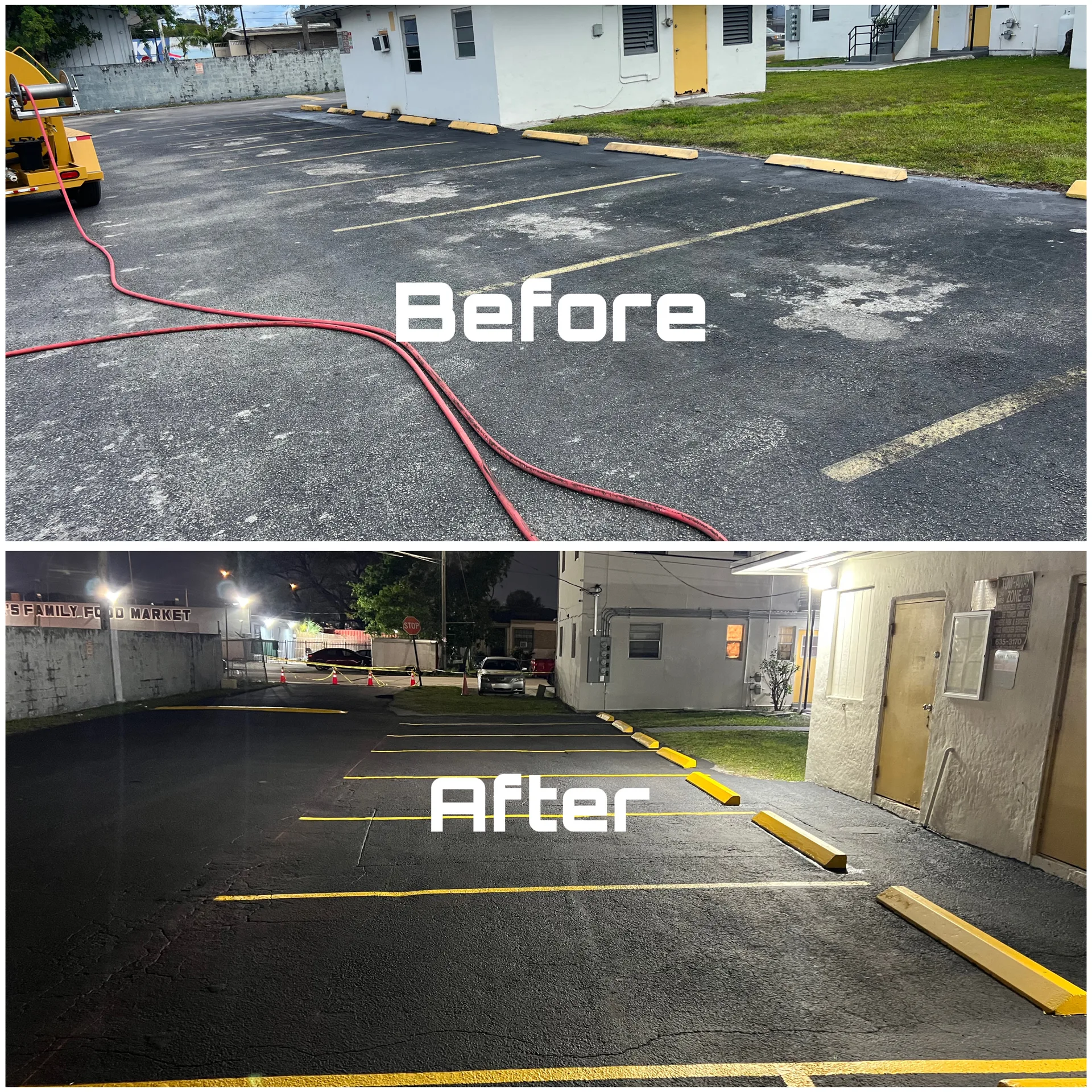
Before and after: a sealcoated and restriped commercial parking lot.
South Florida Factors That Change the Decision
South Florida conditions shift the balance toward early protection and good drainage. The National Weather Service in Miami defines the wet season as roughly May 15 to October 15 and notes it brings about 60 to 70 percent of the year's rainfall. Water standing on pavement is the enemy of the base, so ponding areas matter more here than the age of the surface. The Biscayne aquifer sits close to the surface across Miami-Dade, so water has little room to drain away, and cracks that let more water in can speed up failure. Strong UV and heat also age the surface binder through the year. Practical effects: fill cracks before the wet season, treat ponding as a repair problem rather than a cosmetic one, and plan work around dry windows (see our guide to sealcoat cure time and rain).
Questions That Apply on Commercial and HOA Lots
On shared lots, a scope decision often has to be explained to a board or owner, so these questions help.
- Which of these conditions applies to most of the lot, and which only to a few spots?
- Are the failures at the surface or from the base, and how was that determined?
- If an overlay is proposed, how are cracks and soft spots handled first?
- Does drainage or ponding need correcting as part of the scope?
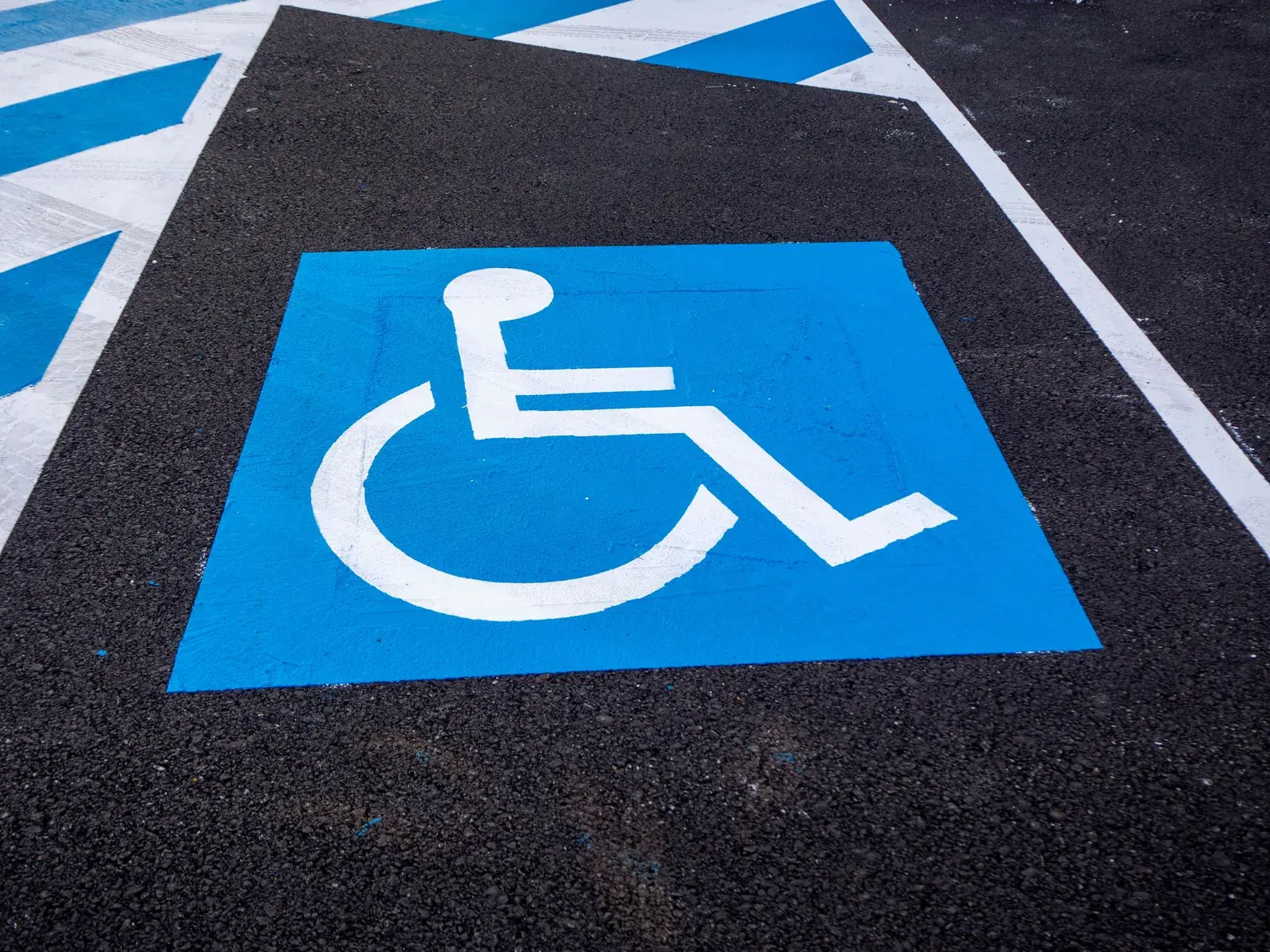
- Will striping, ADA spaces and signage need to be redone afterward? Resurfacing circulation paths and vehicular ways can count as an alteration under the ADA standards (confirm with the local authority; this is not legal advice). The ADA parking lot requirements guide covers the basics.
- Can the work be phased or done overnight or on weekends to keep the lot usable? Bull's Eye offers phased, overnight and weekend scheduling for commercial and HOA work.
A Realistic Maintenance Order
- Look. Walk the surface after rain to see where water stands and which cracks are open.
- Repair defects. Fill cracks and patch failed spots first.
- Protect or resurface. Sealcoat sound pavement, or overlay a worn surface on a stable base.
- Re-mark. Restripe after sealcoating or resurfacing. Bull's Eye can sealcoat and stripe in the same visit, see parking lot striping.
- Replace only when it is time. If failures keep returning after repair, price out replacement.
For more on cost drivers, see our guide to sealcoating cost in South Florida.
Get the Surface Looked At
Call (305) 710-4512 or request the free on-site estimate. Bull's Eye is at 8260 SW 184th St in Cutler Bay and serves Palmetto Bay, South Miami Heights, Goulds, Naranja, Princeton, Perrine, West Perrine, Richmond Heights and Richmond West. Hours are Monday to Friday 7 to 5 and Saturday 8 to 12. One customer described the work as “Fast and Professional.” More answers are in the FAQ.