

Fire lane color, wording and sign spacing are not the same everywhere, because the Florida Fire Prevention Code leaves the marking details to the local authority having jurisdiction (AHJ). That means the right answer for a property in Cutler Bay or Palmetto Bay comes from the fire authority that covers it, not from a general rule or a neighboring county. This guide explains how the requirement is set, what Miami-Dade Fire Rescue publishes, and how to get a written answer before any paint goes down. It is general information, not legal advice.
What Sets the Rule
Fire lane marking starts with the fire code and ends with a local decision. Florida's statewide code is the Florida Fire Prevention Code. The State Fire Marshal lists the 8th Edition (2023) as current, effective December 31, 2023, based on the 2021 editions of NFPA 1 and NFPA 101 with Florida amendments, and notes that a county, municipality or special district may also have local amendments that apply only in its own area.
NFPA 1, Chapter 18 deals with fire department access. Miami-Dade Fire Rescue's own access-road document cites NFPA 1 section 18.2.3 for its dimensions. For marking, other fire authorities that implement NFPA 1 paraphrase section 18.2.3.5 as saying that, where the AHJ requires, approved signs or other approved notices must be maintained to identify fire department access roads. The key word is “approved”: the AHJ approves the sign or marking. The code text itself is sold by NFPA, so we are describing it through the fire authority publications we could open rather than quoting it.
Why Color and Wording Differ Between Jurisdictions
Because each AHJ approves its own markings, two nearby properties can legitimately have different fire lane colors, and a contractor who repaints from habit can get it wrong. Fire authorities publish their own packets for this reason. As one example, the City of Rockville, Maryland, specifies 12-by-18-inch signs with red reflective lettering on white, and for curb painting it describes white reflective block lettering on a yellow reflective curb, citing NFPA 1 section 18.2.3.5. That is one city in another state, shown only to illustrate that the details are local. It says nothing about what applies in Miami-Dade.
What Miami-Dade Fire Rescue Does Publish
Miami-Dade Fire Rescue's Access Road Requirements document (revised December 15, 2016) covers the geometry of fire department access, not the paint. It says its figures are minimums and that the AHJ may require modifications case by case. It does not state a fire lane color or sign wording. The numbers below come from that document and are worth knowing when you are deciding where a lane must stay clear.
| Topic | What the document says |
|---|---|
| Design truck | 47 feet long; lanes, set-up sites and slopes must accommodate it |
| Road width | 20 feet unobstructed for two-way traffic; 15 feet minimum accepted for one-way lanes |
| Vertical clearance | 13 feet 6 inches minimum |
| Reach to buildings | Access must extend to within 50 feet of an exterior door; no part of the first-story exterior wall more than 150 feet from access (450 feet if fully sprinklered) |
| Dead ends | Turn-around required beyond 150 feet (for example a 50-foot-radius cul-de-sac or T or Y turn-around) |
| Load | Designed and maintained to support a minimum of 32 tons, with an all-weather surface |
| Hydrants and fire department connections | 5 feet of clearance in front and to the sides; keep landscaping and parked cars out |
| Gates | 15 feet clear width, or 20 feet if within a turn radius; Knox key switch or padlock access |
Two of those items matter for pavement work. The 32-ton capacity and all-weather surface mean a lane that is cracked, rutted or ponding is a fire department access problem, not just a cosmetic one. And hydrant clearance means a stripe layout that adds stalls beside a hydrant or fire department connection can create a violation.
How to Find the Requirement for Your Property
The fastest route is to ask the fire authority and get the answer in writing. Whether your property falls under Miami-Dade Fire Rescue or another agency, and whether the town or village adds its own rules, can vary, so identify the AHJ first.
- Look for an approved site plan or past inspection record. Fire lane locations and any approved marking details are often on the site plan, in a prior inspection report or in the property's file. Your property manager or association may already have them.
- Identify the AHJ. Miami-Dade Fire Rescue publishes the county's access-road requirements, but which agency is the AHJ for your address, and whether a municipality adds its own rules, should be confirmed rather than assumed. Cutler Bay and Palmetto Bay are municipalities in Miami-Dade, so ask the town or village building office as well as the fire marshal.
- Call the fire marshal. Miami-Dade Fire Rescue lists its Fire Marshal (Fire Prevention, Permits and Inspections) at 786-331-4800, and the department's Fire Prevention Division is reached Monday through Friday, 8 a.m. to 5 p.m. Ask for the marking specification for your address: curb color, stencil wording, sign size and spacing.
- Ask whether your property needs approval before changes. Moving a fire lane, adding stalls or changing a gate is a different request from repainting what exists. Ask which applies.
- Write down the answer. Get the name, date and details in an email or on the plan, and hand that to the contractor.
Miami-Dade Fire Rescue also says it will review plans before an application is submitted, through a consultation with its Fire Water Engineering group; call 786-315-2771 to arrange it. Fees apply, so ask when you call.
Fire Lane Signs and Tow-Away Signs Are Different
A fire lane sign tells drivers not to park; a tow-away sign tells them what the owner will do about it, and Florida regulates the second kind by statute. If a property owner wants unauthorized vehicles towed from a private lot, section 715.07 of the Florida Statutes requires prominently placed notices that include “tow-away zone” in at least 4-inch letters, notice text in letters at least 2 inches high in a light-reflective color on a contrasting background, placement within 10 feet of the road at each driveway access or curb cut, a sign height between 3 and 6 feet, and the name and phone number of the towing firm. The statute also has exceptions, including a short alternative sign for businesses with 20 or fewer parking spaces. Check the full statute or ask an attorney before relying on that summary.
Fire lane signs and curb markings belong to the fire authority's rules; tow-away notices belong to the statute. A lot may need both. See our sign installation page for post and panel work.
How Enforcement Generally Works
Enforcement on a private commercial lot mostly runs through inspection and the owner's own authority to remove vehicles. Miami-Dade Fire Rescue states that businesses need an annual inspection and a Life Safety Operating Permit to stay compliant with the Florida Fire Prevention Code, and inspections are prioritized by occupancy type. Missing, faded or wrong markings are the kind of item an inspection can flag, so a fire lane that has worn away is worth fixing before the inspector sees it.
We have not verified citation amounts for fire lane parking in Miami-Dade or in Cutler Bay or Palmetto Bay, and we are not stating any. Ask the fire authority and the town or village code office, and the tow company the owner hires, how violations are handled.
Fire Lanes and Pavement Work
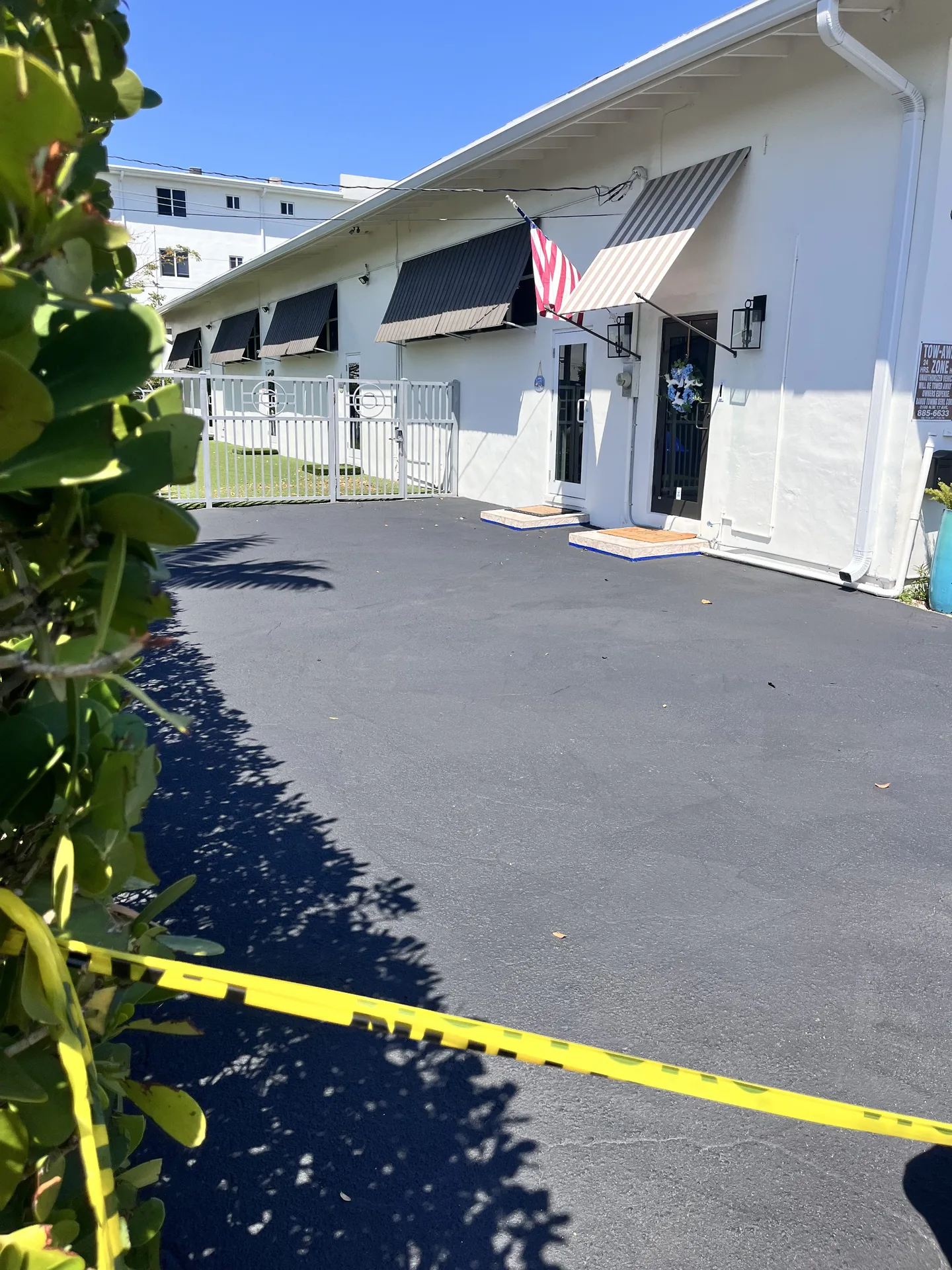
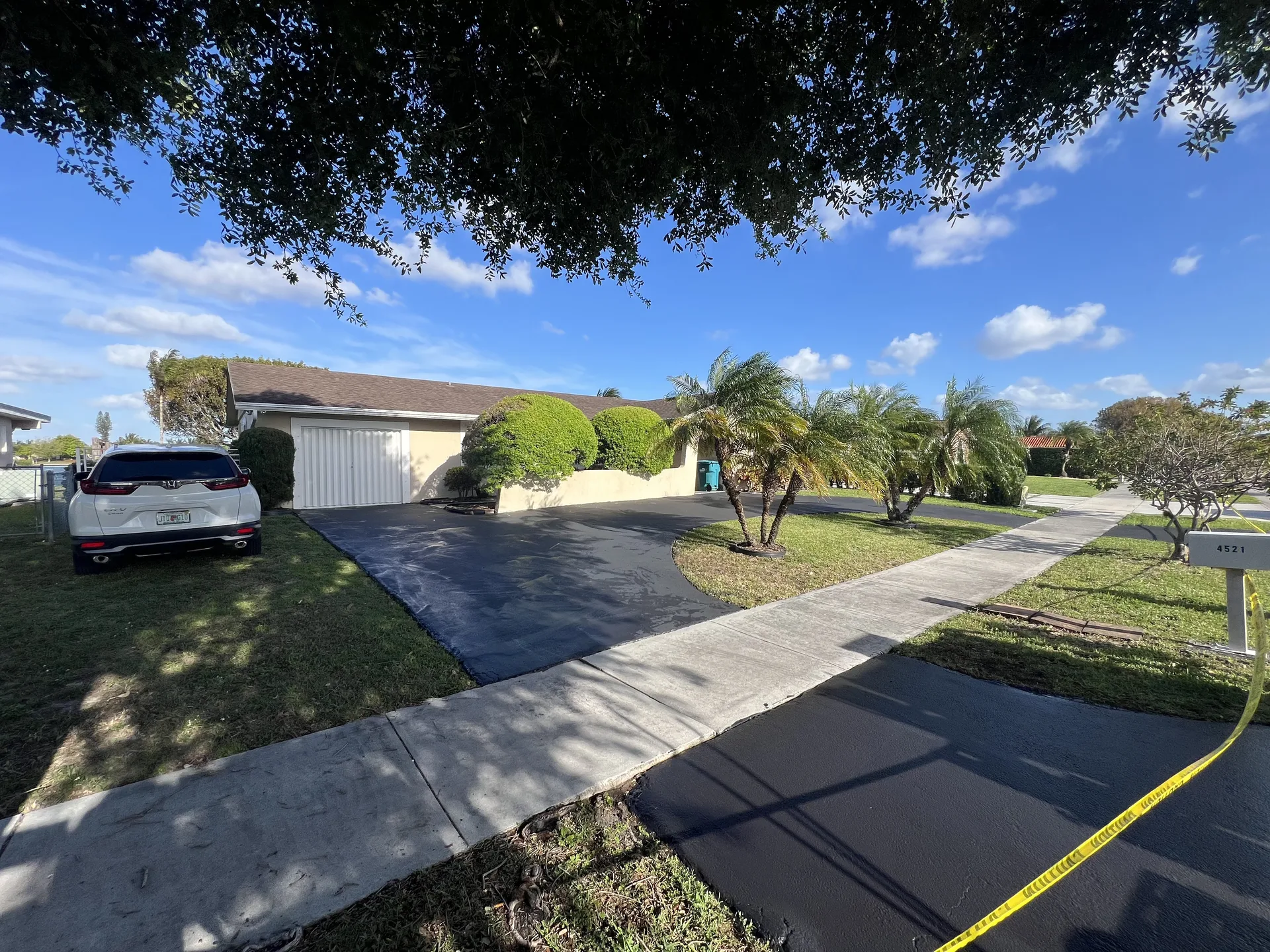
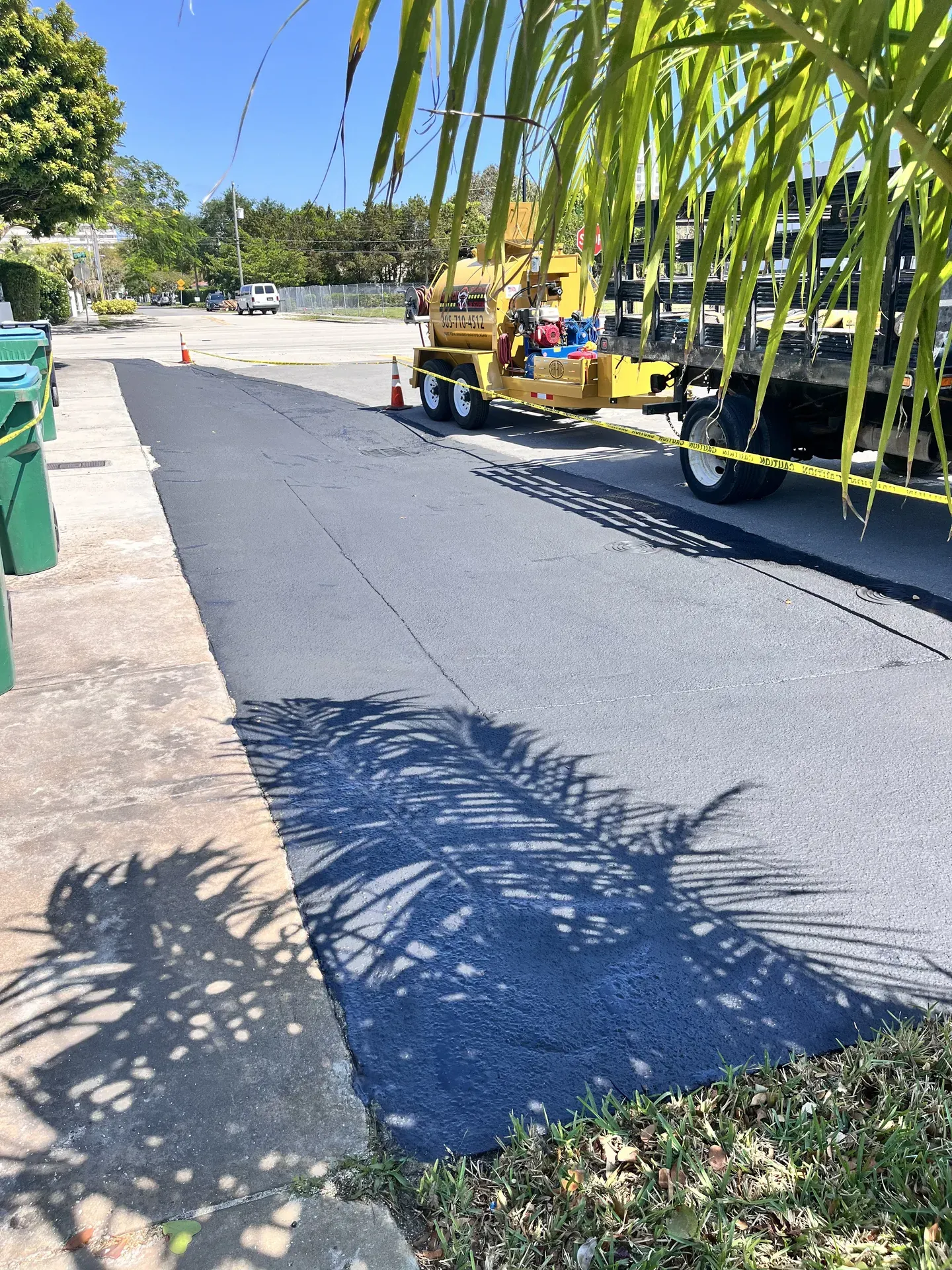
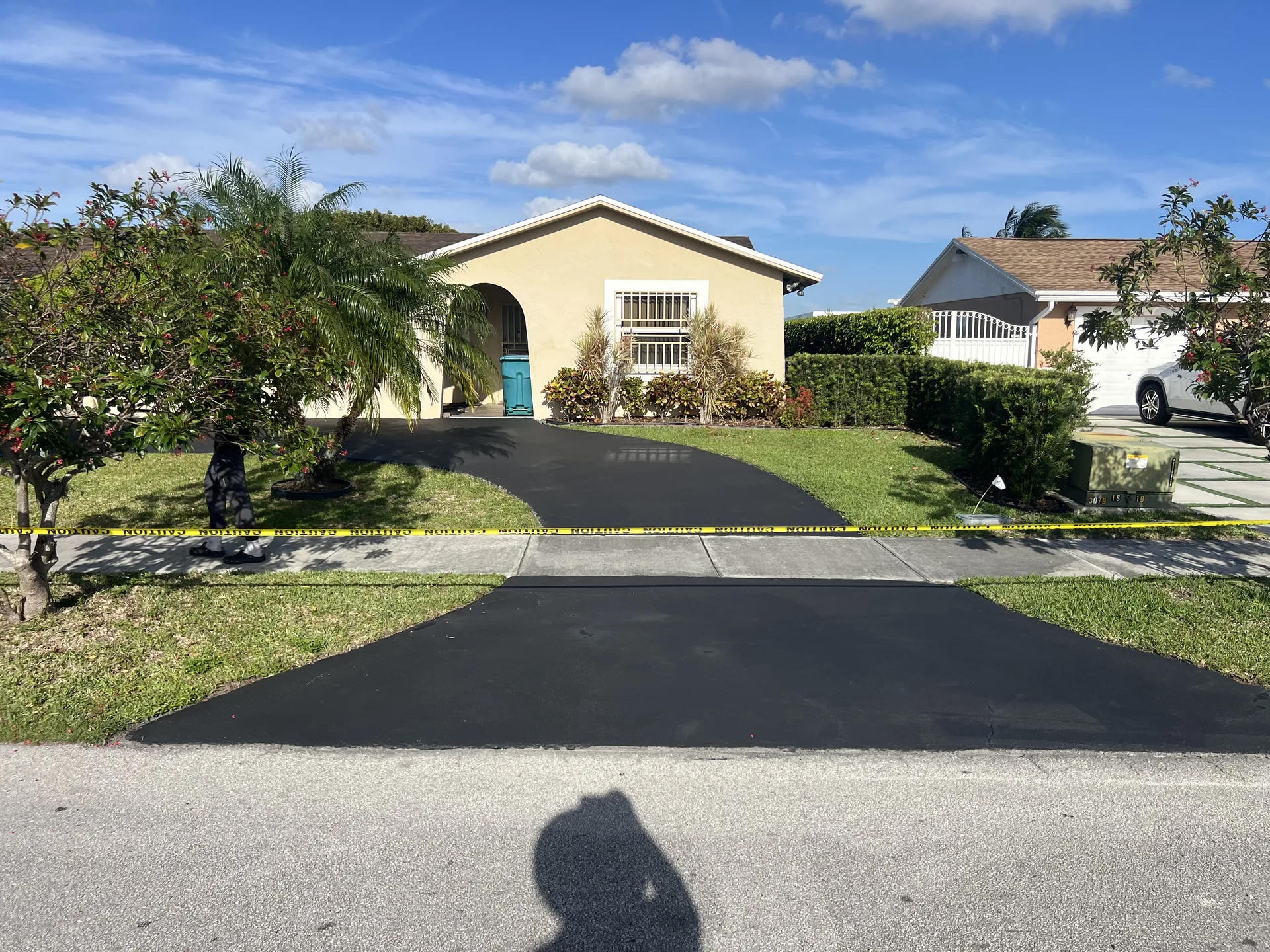
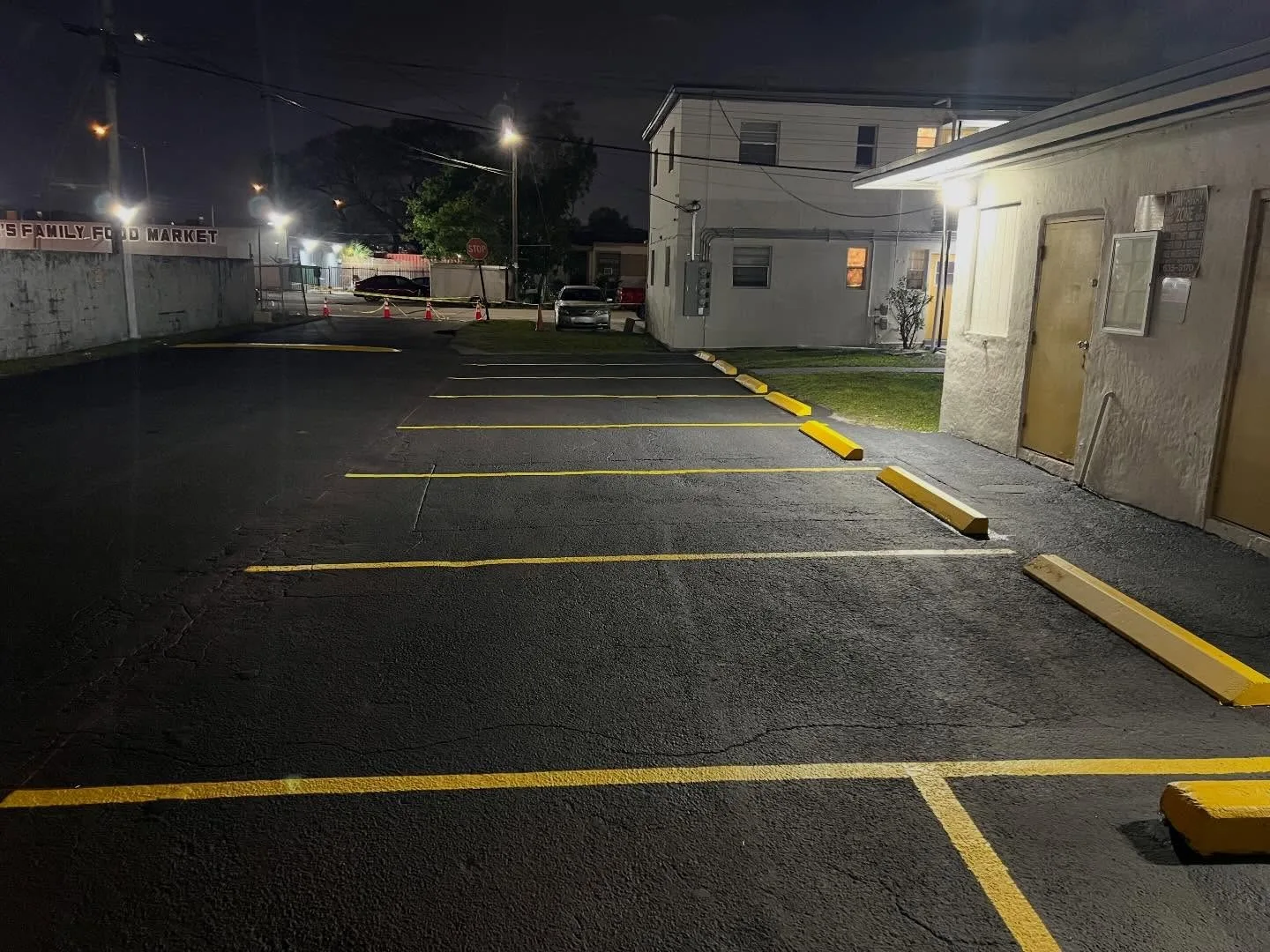
Sealcoating covers existing curb paint and pavement markings, so fire lane marking has to be redone afterward, and the original specification is what to restore. Good practice is to photograph and measure the lanes, curb stencils and signs before work begins, compare them to the AHJ specification, and re-apply them exactly. If the lot is also changing its layout, check the fire lane location before drawing new stalls, because stalls added in a lane or next to a hydrant create problems that paint cannot hide.
- Before the job: collect the site plan, last inspection report and the AHJ marking specification.
- During planning: mark hydrants, fire department connections, gates and lanes on the layout, and keep stalls out of them.
- After the job: check curb color, stencil wording, sign placement and visibility against the specification, and keep the record.
- Surface: repair cracks and potholes in the lane before sealcoating so it holds the load it is meant to hold; see patching and crack filling.
Accessible parking is the other marking rule that gets checked when lines are redone; our ADA parking lot guide covers it, and curb painting covers curb work.
Common Mistakes
- Repainting a lane in the color that was used at another property.
- Adding stalls into a fire lane or beside a hydrant during a re-stripe.
- Letting curb stencils and signs fade until an inspector notices.
- Assuming the HOA, tenant or contractor decides the color, when the fire authority does.
- Treating tow-away signage and fire lane signage as one thing.
Next Step
Get the marking specification for your address from the fire authority, in writing, before you schedule paint. With that in hand, a fire lane painting job is a matter of following the specification and the approved layout. Bull's Eye can mark lines from your approved specification, and works with property managers and HOA boards on phased, overnight or weekend scheduling, including HOA and condo lots. To talk through a lot in Cutler Bay, Palmetto Bay or nearby, call (305) 710-4512 or request the free on-site estimate.