

New asphalt lasts or fails based on what is under it: the prepared ground, the compacted base, the slope that sheds water, and the thickness actually installed. Whatever the contractor, ask how each of those steps will be handled before you sign anything. Bull's Eye offers new asphalt paving in Cutler Bay and nearby communities, with free, no-obligation on-site estimates.
What's Included
- A proper job starts with evaluating the existing ground, drainage path, and access
- Grading and base preparation should be sized for the load: cars, trucks, RVs, or lot traffic
- Compaction of base and asphalt layers is key to long-term durability
- Slope set so rainwater sheds toward the swale or drain instead of ponding
- New paving for driveways, parking lots, and private roads, with striping available afterward
- An estimate should spell out scope, thickness, and what is and is not included
What "New Asphalt Paving" Actually Includes
A new asphalt installation is a built structure, not a coat of black on the ground. It is made of layers: prepared subgrade, a compacted aggregate base, and one or more layers of hot-mix asphalt, shaped so water runs off. The asphalt is the part you see; the base and the slope do most of the work of keeping it from cracking, rutting, and holding water for the next couple of decades.
The Process, Step by Step
- Site visit and scope. The contractor looks at the area, how water moves across it, what vehicles will use it, and where it ties into the street, garage, curbs, or existing pavement.
- Permits and approvals. The Town of Cutler Bay requires a permit for driveway work and asks for a survey and driveway detail with the application. Doral's published driveway guide notes that inspections typically include a sub-base inspection before paving material goes in, and HOAs often want an approval letter. Confirm what your address needs before a schedule is set.
- Excavation and subgrade prep. Existing material, vegetation, and soft soil are removed or corrected, and the subgrade is shaped and compacted.
- Base installation. An aggregate base, built up in compacted layers, gives the asphalt something stable to sit on. This is where the heavy-use and wet-ground decisions get made.
- Grading and drainage. The surface is set to a slope that moves water away from the house or building and toward the swale or drain, with the transitions at the street, garage, and edges worked out.
- Paving and compaction. Hot asphalt is spread to the specified thickness and compacted. Compaction is a big part of density, and density is a big part of durability.
- Finishing and cool-down. Edges are cleaned up, striping or wheel stops are added on commercial work, and you get clear instructions on when it can take traffic.
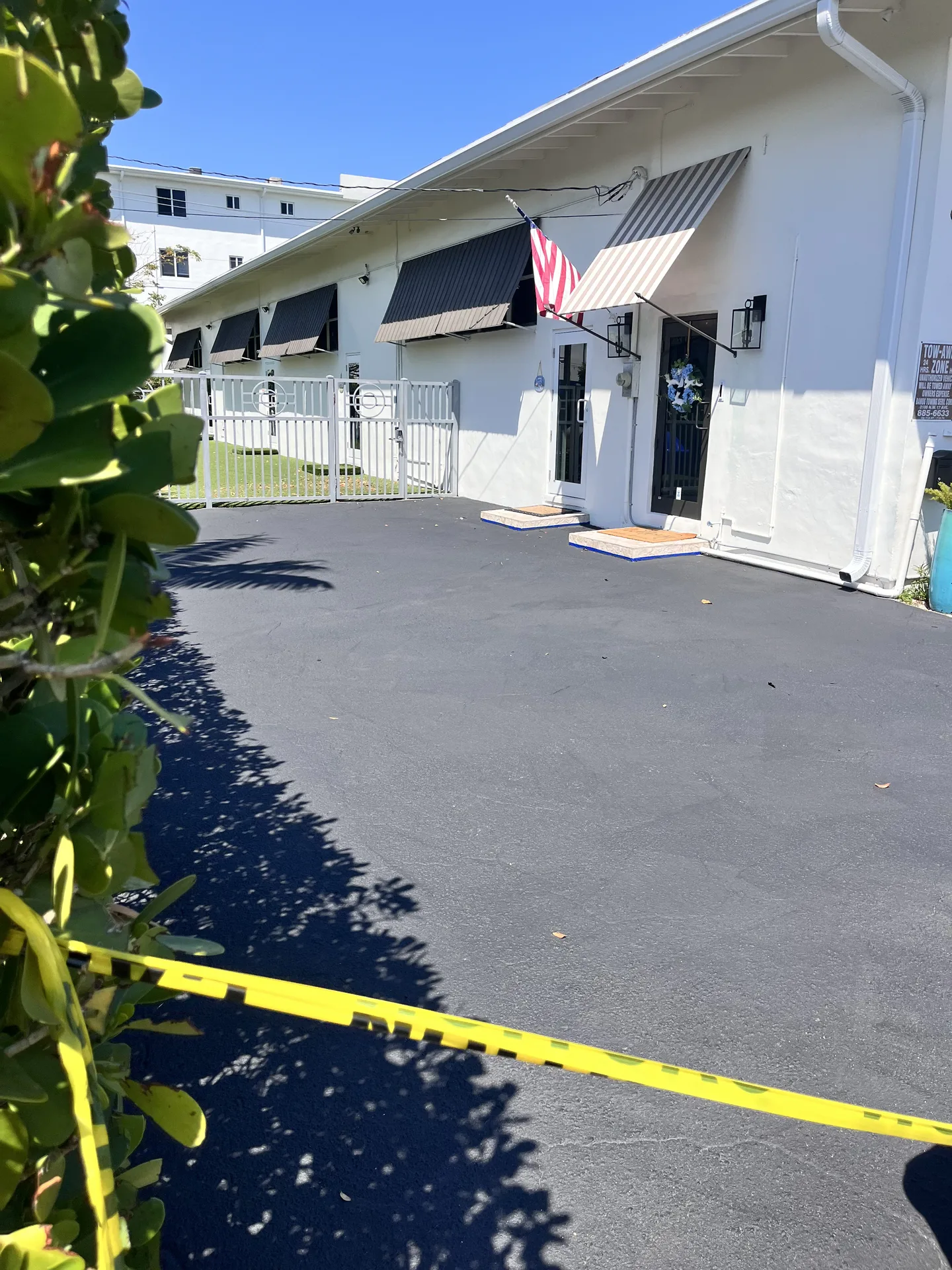
Good paving starts with prepared ground and a compacted base long before the final layer goes down.
Why South Florida Ground Changes the Plan
Cutler Bay is in the part of South Florida where rain is heavy and the water table is high. The National Weather Service defines the South Florida wet season as May 15 through October 15, when roughly 60 to 70 percent of the year's rainfall arrives, with showers and thunderstorms near-daily in summer. For pavement, that means a base that stays wet gets soft, and a driveway or lot that does not shed water will pond, stain, and break down early. Practical consequences: grading and drainage have to be part of the plan rather than an afterthought, and wet-season weather affects scheduling, since asphalt is generally not placed in the rain or on a saturated base.
Local rock helps in some ways: Miami-Dade is known for its limestone, and crushed limerock is a standard base material in Florida road building under FDOT specifications. Which base material and thickness your project needs depends on the soil under it and the loads above it, so a one-size-fits-all number is unreliable; ask for it to be addressed in your estimate.
How Thick Should New Asphalt Be?
Thickness depends on use. Guidance from industry sources puts light residential driveways at a minimum of about 2 inches of compacted asphalt over a compacted base, with more for heavy vehicles, RVs, and commercial traffic. Two things worth knowing as a buyer: measure compacted thickness, not loose thickness, because mix compresses as it is rolled; and put the number in the contract. If a quote does not say compacted thickness and base depth, you can't compare it to another quote or check the work afterward.
What Drives the Price
Consumer cost guides publish per-square-foot ranges that vary widely and mix residential and commercial jobs, so a generic number isn't reliable. Real quotes depend on:
- Total area and shape, and how much removal of old pavement, soil, or vegetation is needed.
- Base depth and material, set by soil conditions and expected loads.
- Asphalt thickness and number of layers.
- Grading, drainage work, and tie-ins at curbs, garages, and the street.
- Permits, surveys, and inspections.
- Equipment access, and phasing or after-hours scheduling for occupied properties.
Your actual number comes from the free on-site estimate.
New Paving or Overlay? How to Decide
If the base under your existing pavement is still sound, an overlay may be enough. Choose new paving when the old pavement has widespread alligator cracking, soft or flexing areas, drainage that can't be corrected on top of what is there, or when you are paving ground that has never had pavement. A site visit helps confirm which one your site needs.
Questions to Ask Any Paving Contractor
- What is the compacted base depth and the compacted asphalt thickness, in writing?
- How will water drain, and where does it go?
- Who pulls the permits, and what inspections are required?
- Can you show proof of insurance? Bull's Eye carries general liability insurance, with proof on request.
- What is the timeline, including cool-down, and what weather will delay it?
- What is and is not included: removal, haul-off, striping, edging, restoration?
Door-to-door "leftover asphalt" offers are a long-standing complaint nationally: thin layers laid with no base and no written scope. An estimate with thickness and base spelled out is your best protection.
Commercial Lots, HOAs, and Private Roads
New lots and private roads add design and compliance questions: accessible parking, fire lanes, signage, and traffic flow. Bull's Eye also offers striping, ADA markings and signage, and wheel stops for the finishing work on a lot. Engineering, site plans, and code compliance for new lots may require other professionals, so bring them in early.
After the Asphalt Goes Down
Keep vehicles off until you're told it is ready, which is commonly a few days and can be longer in summer heat. For the first few weeks, avoid hard turning while stopped and parking in the same spot every day. Many contractors recommend a first sealcoat and regular crack sealing once new asphalt has cured to help protect it; ask about timing at your estimate.
Ready to Price Your Project?
Call (305) 710-4512 or request a free estimate. The on-site estimate is the time to talk through base, drainage, thickness, and permits so you have a scope you can compare.
Serving Cutler Bay and Nearby Communities
We're based in Cutler Bay and offer new asphalt paving throughout the area. We also regularly serve nearby Palmetto Bay, South Miami Heights, Goulds, Naranja, Princeton, Perrine and West Perrine, Richmond Heights and Richmond West. Not sure if your property is in our service area? Just give us a call.


